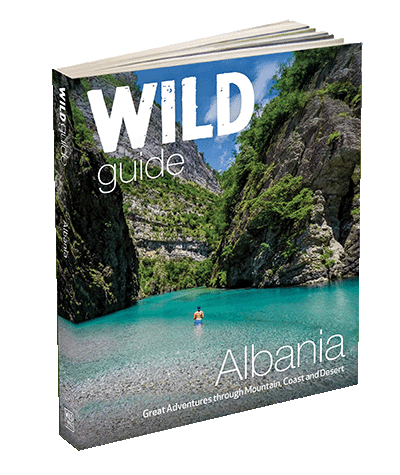
Wild Guide Albania
£18.99
700 adventures from coast to mountain by Granit Temaj
Or buy the PDF ebook for instance download here
Description
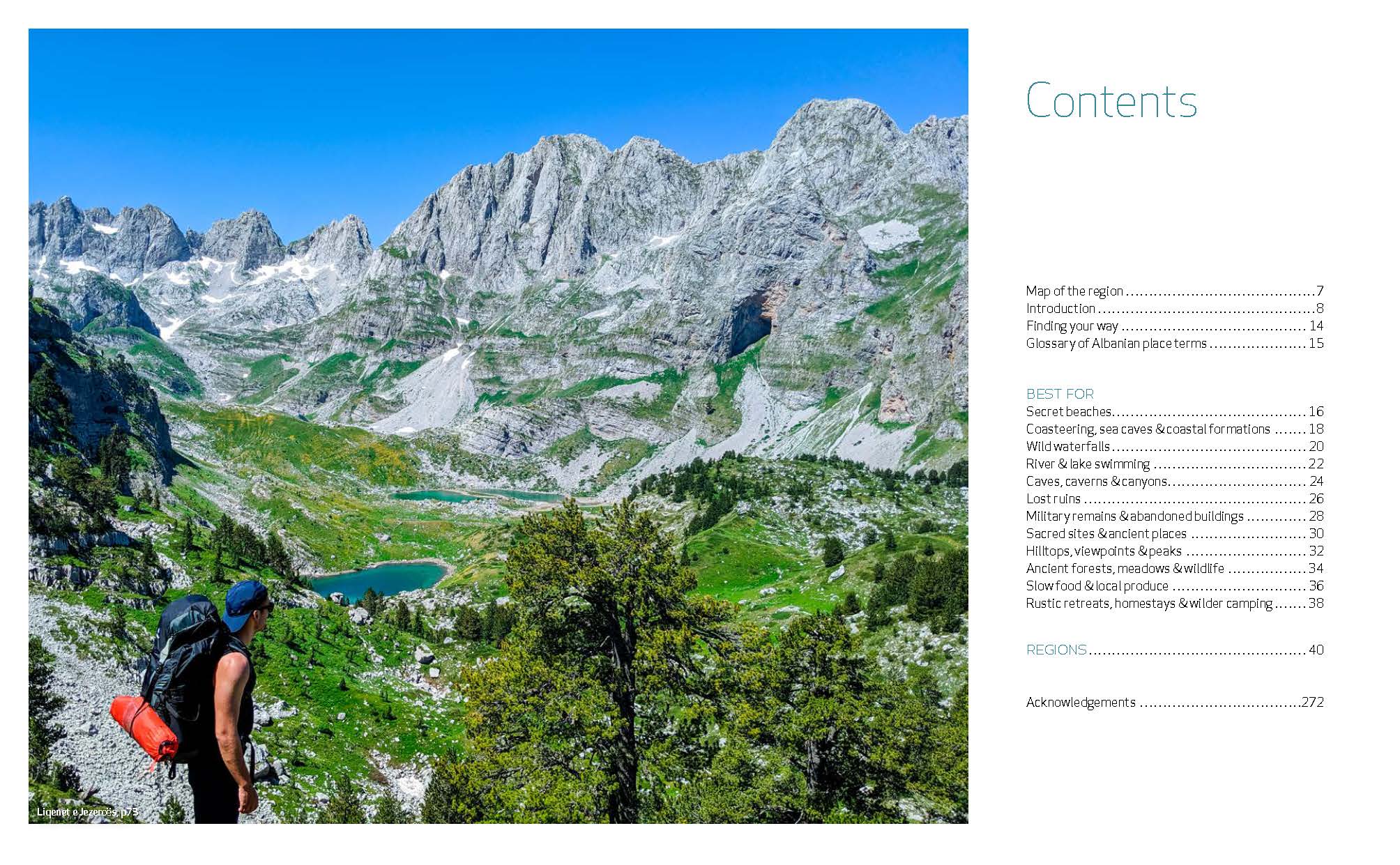
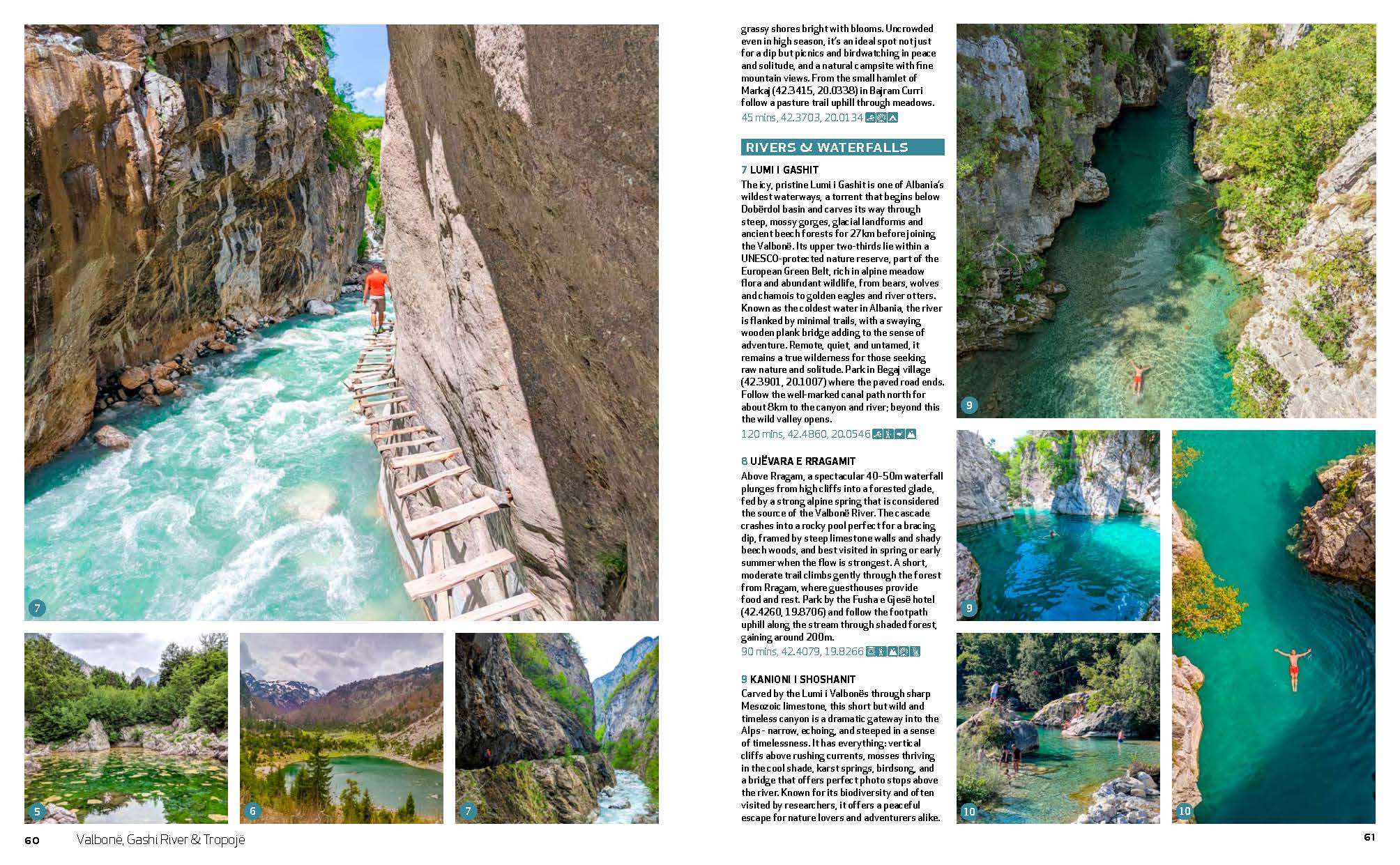
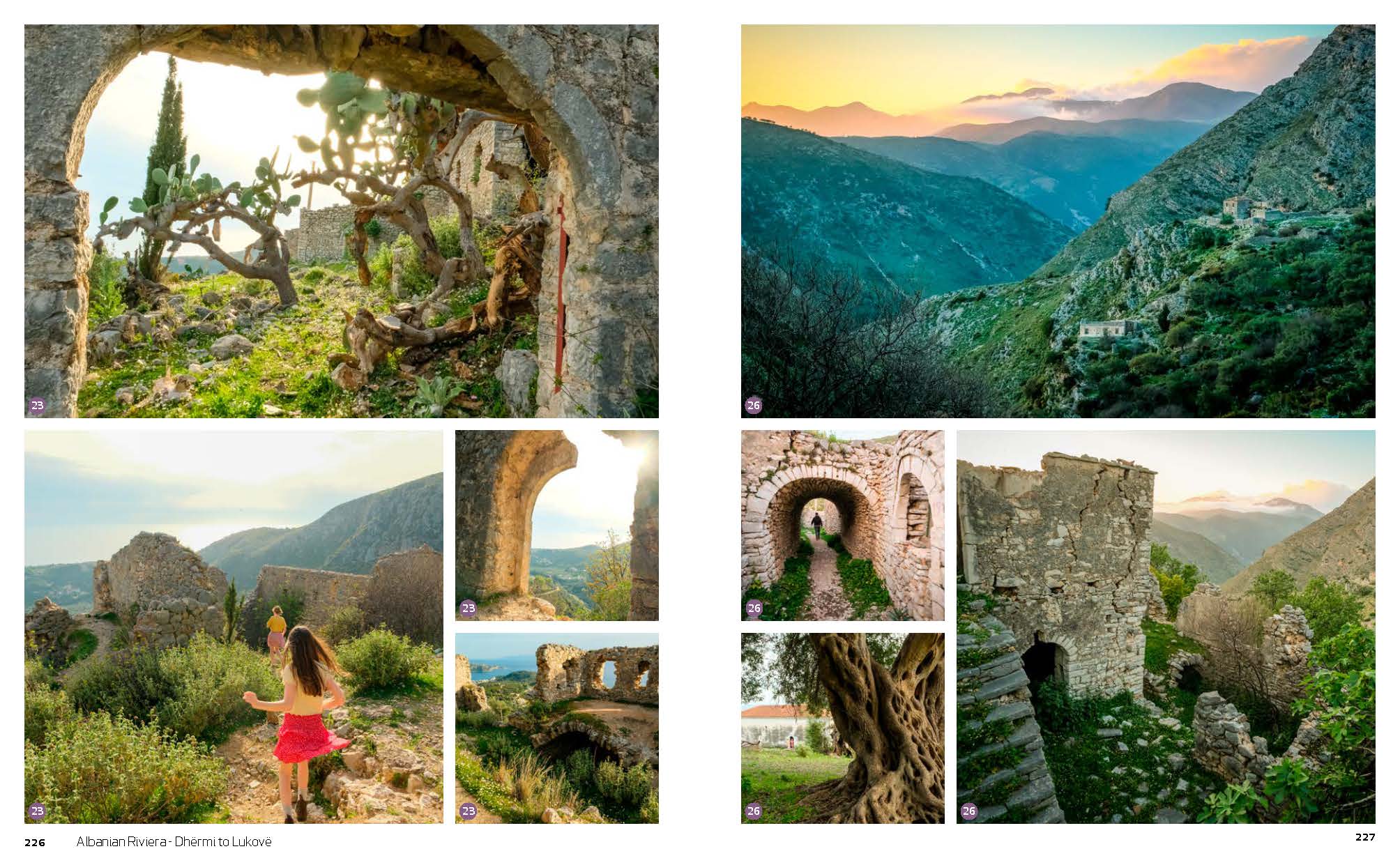
From the soaring peaks of the Accursed Mountains to the sunlit shores of the Ionian Riviera, Wild Guide Albania reveals one of Europe’s most undiscovered landscapes: a country that time seems to have forgotten. Explore ruined fortresses, shepherd trails, organic alpine farmstays, and Europe’s last wild river, the Vjosa. Trek to glacial lakes through remote stone villages, extraordinary canyons, blue waterfalls and ancient forests. This inspiring guidebook charts Albania’s untamed frontiers. With dazzling photography, evocative travel writing, maps, coordinates and detailed directions, it is the perfect companion for adventurers, families and armchair explorers, as well as campervan and 4×4 travellers.
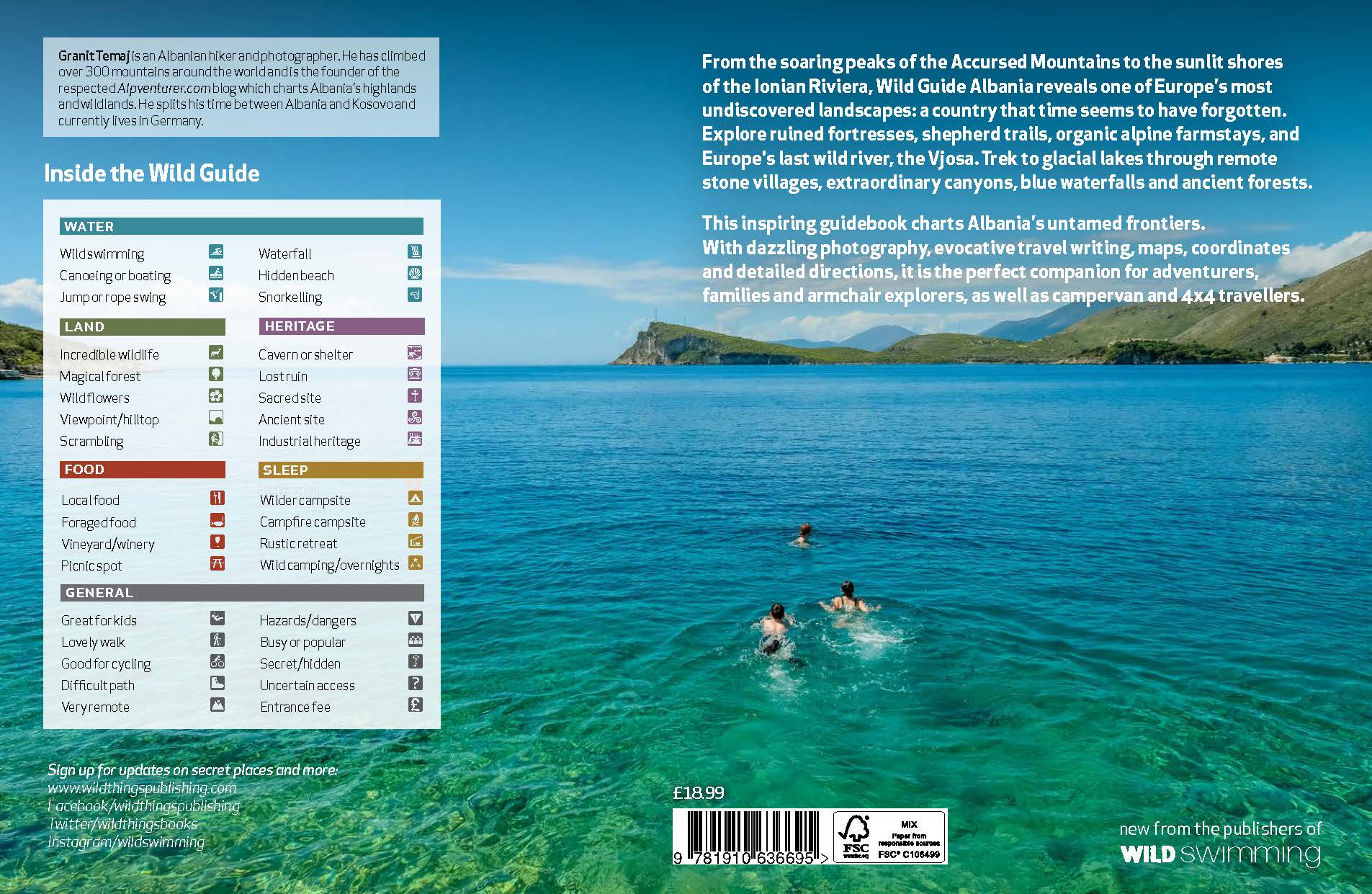
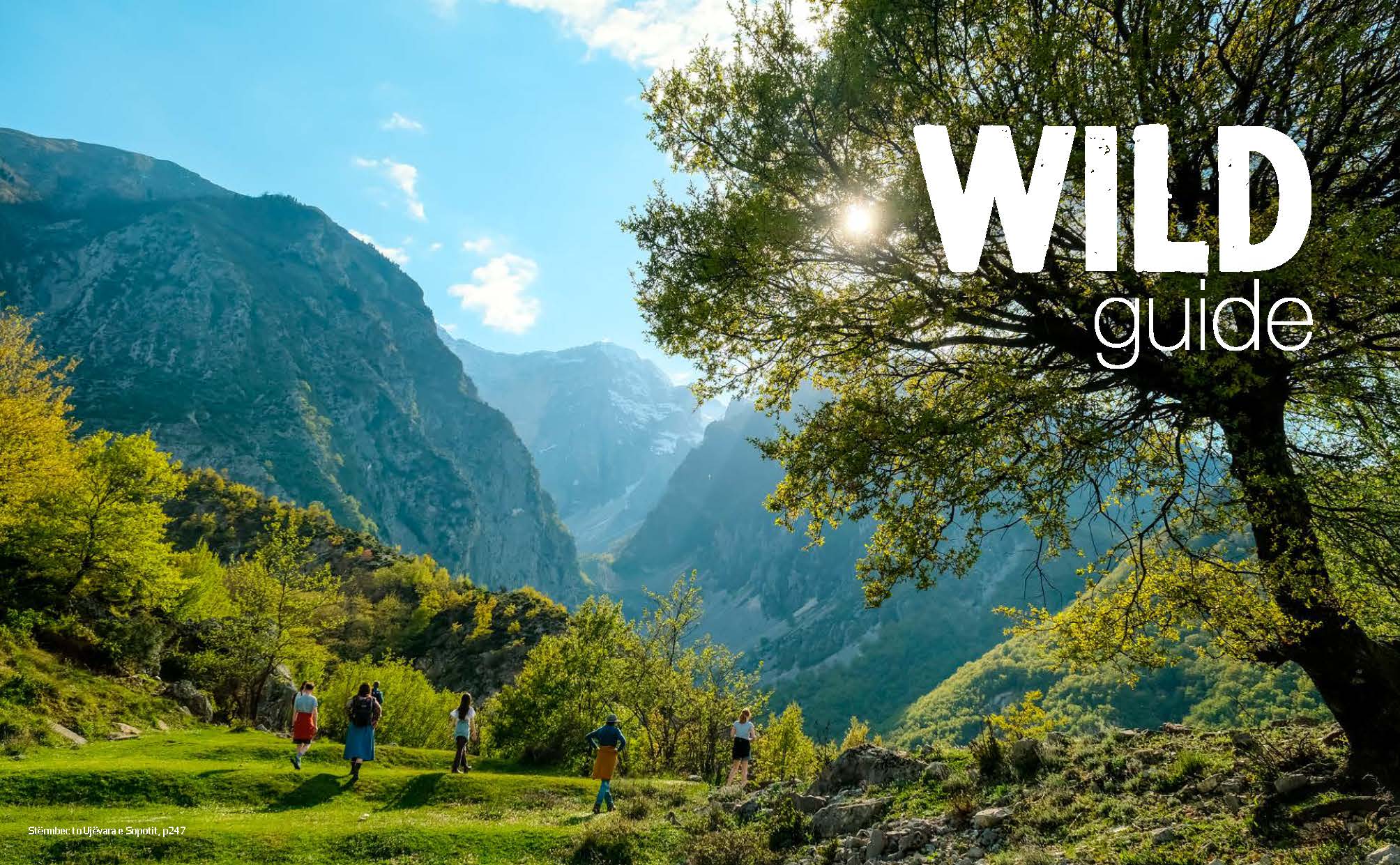
New from the award-winning Wild Guide series, with 500 secret adventures and 200 wilder places to eat and sleep, taking you to places no other guidebooks reach.
-
- Secret coves, sea caves, cliff views and coastal wonders
- Azure canyons, ‘blue eyes’ springs, thermal waters and wild river swims
- Hikes, viewpoints and scrambles; remote mountains, gorges and ridges
- Alpine meadows, secret valleys, wildlife spectacles and ancient forest
- Cliff churches, hidden chapels and hilltop shrines
- Ottoman castles, lost villages and ancient remains
- Bizarre geological formations, from rock pinnacles to vast caverns
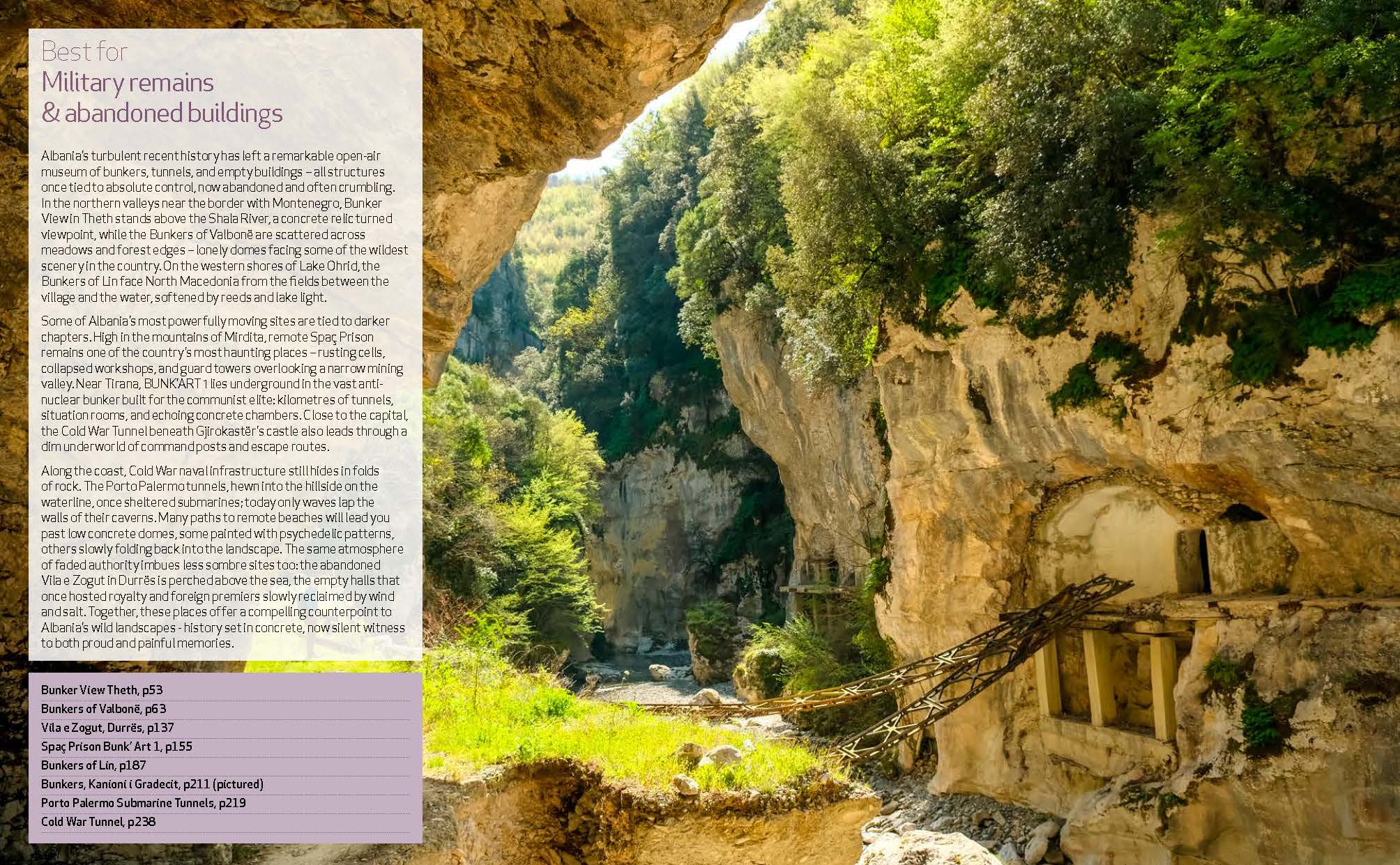
- Military bunkers and tunnels, abandoned buildings, old factories, bridges and aqueducts
- Mountain farms, organic vineyards, river campsites and homestays
Granit Temaj is an Albanian hiker and photographer. He has climbed over 300 mountains around the world and is the founder of the respected Alpventurer.com blog which charts Albania’s highlands and wildlands. He splits his time between Albania and Kosovo and currently lives in Germany.
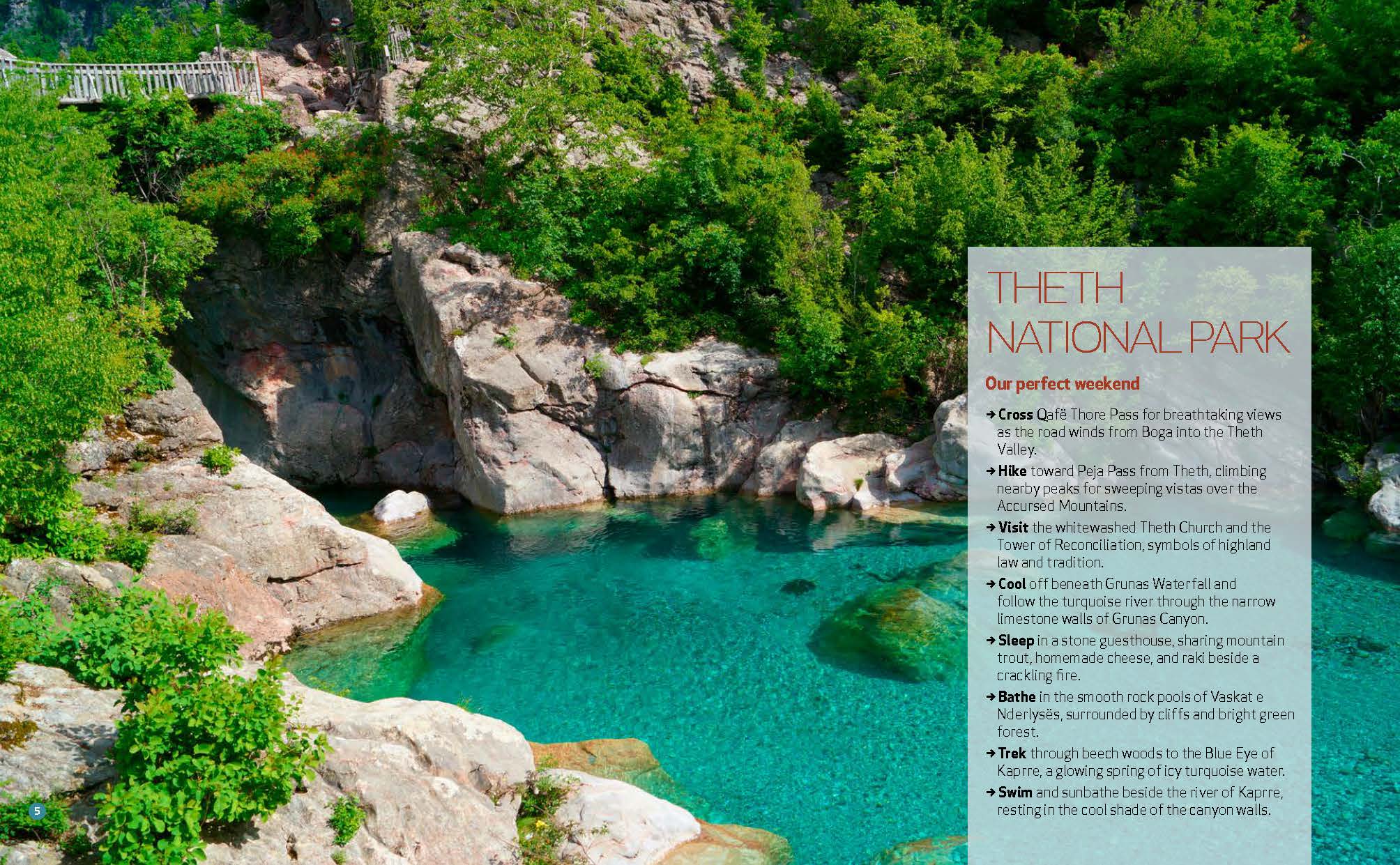
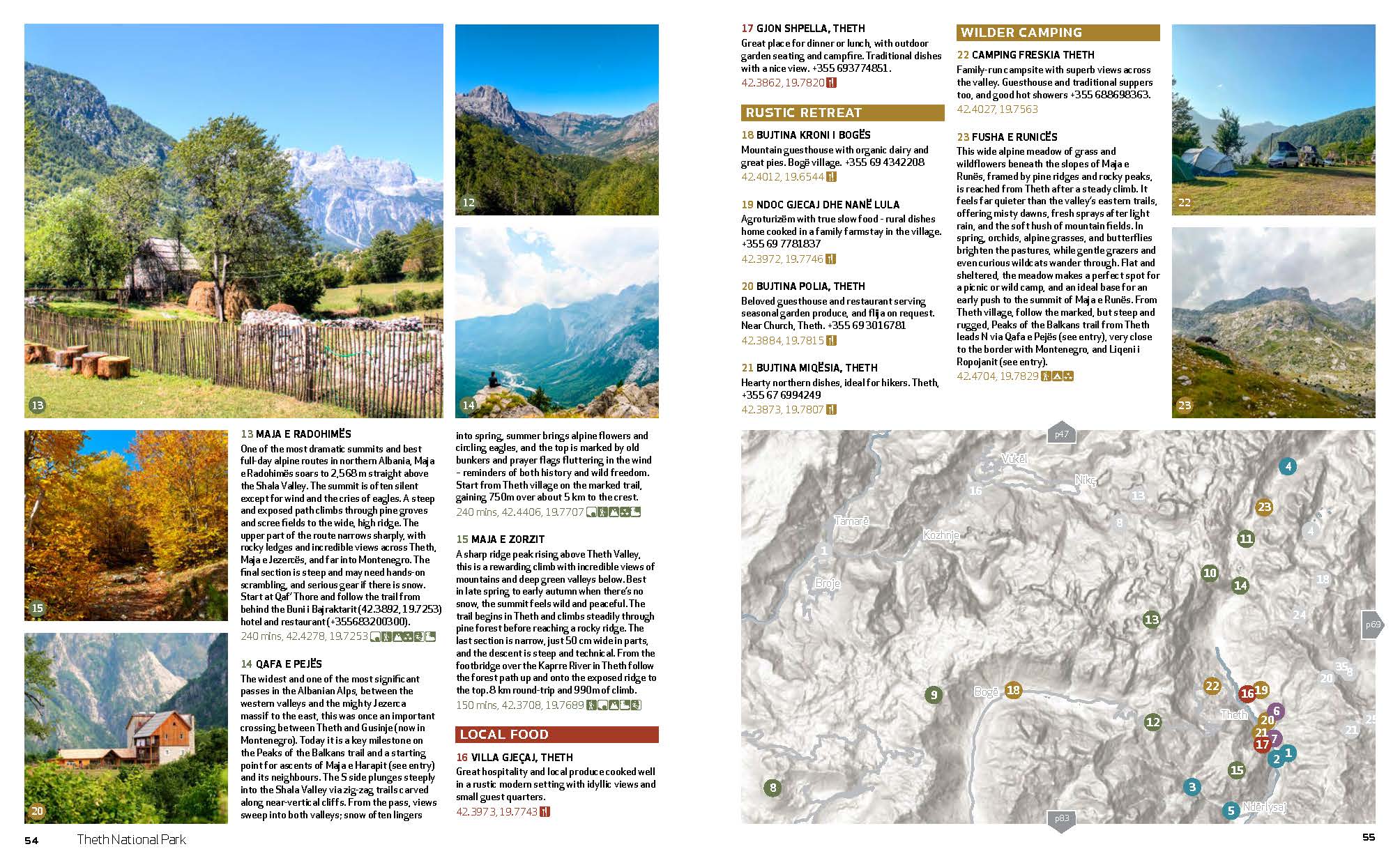
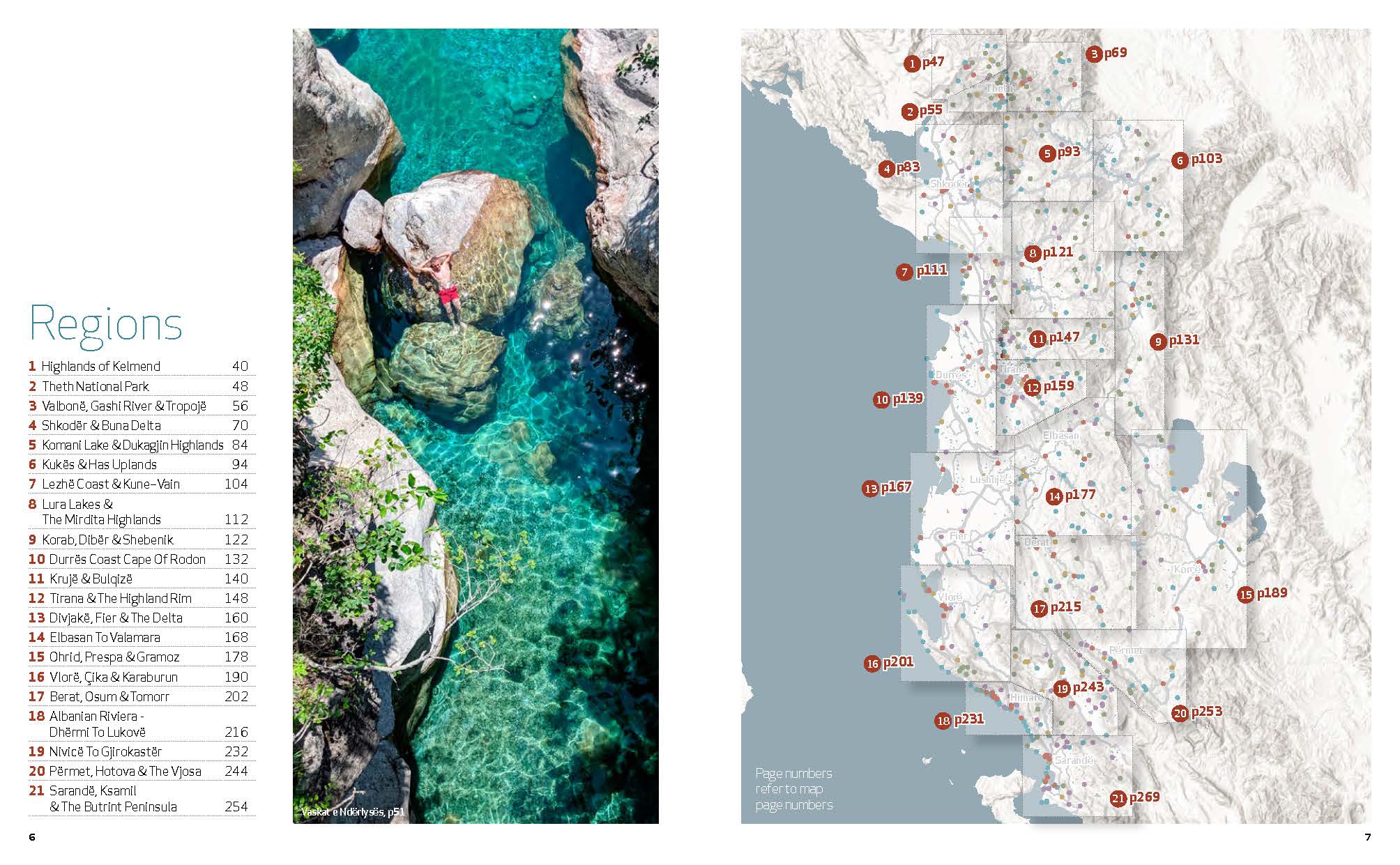
Introduction
Albania has shaken off past isolation, but still feels untamed, from mountains that keep alive the memory of myth to pirates’ caves on the sea that glow with unearthly light. This is Europe’s final wilderness, both geographically and historically: a country of raw landscapes and living traditions, where shepherds still take their flocks to high summer pastures, the scent of wild sage drifts through ancient stone villages, and produce from chestnuts to olives and wine gives a local character to every region. It may be small, but the possibilities for adventure are immense.
Ancient land of eagles
The soaring mountains of inland Albania fall dramatically to fertile plains and warm, glittering seas. Through it all, wild rivers still run free, and ancient, often unmarked paths weave between forests, pastures, and villages through dramatic geology. From the jagged peaks of the Accursed Mountains in the north, through the broad river plains of the interior to the sun-washed Ionian coast in the south, the country’s natural variety has something to satisfy every soul.
The rocks here are some of the oldest in the Balkans: ancient limestones and dolomites uplifted millions of years ago into the spectacular Dinaric Alps, whose cliffs and glacial cirques rise to their highest in the iconic pyramidal summits of Jezerca, Arapi, and Kollata, the twisted heart of the Accursed Mountains. Ice ages carved a labyrinth of valleys, and bowls below, leaving behind emerald glacial lakes and hidden waterfalls. The most dramatic canyons are in the southern mountains, where the Osum, Nivica, and Langarica slice through layers of limestone, offering canyoning and rafting adventures beneath soaring walls festooned with vegetation. Elsewhere karst springs and riverside hot springs beloved by locals bubble from deep caverns, and lakes from ancient Ohrid to snaking Koman and little Bufi provide tranquil waters.
Across the lowlands, the landscape softens into rolling hills and fertile fields, where the great rivers – the Drin, the Vjosa, the Osum and the Shkumbin – wind to the sea. Adriatic shores are wide and gentle, shaped by rivers depositing sand to form great lagoons and dune-backed beaches. Further south, the Ionian coastline rises sharply into soaring cliffs and rocky promontories with hidden coves and caves above the sparkling sea; those seeking greater isolation can hike the deserted island of Sazan and the dramatic Karaburun peninsula. Along Albania’s coast you can find a Mediterranean character that has all but vanished elsewhere, quiet and only lightly touched by time.
The name Shqipëria means ‘land of the eagles’, and the iconic birds soar above both the high meadows where wolves and lynx still roam and the broad coastal wetlands. Spanning alpine and Mediterranean habitats, Albania is a biodiversity hotspot, with 15 national parks (Parku Kombëtar). Vast Lake Shkodër and deep Ohrid are important for birdlife, while the Vjosa, one of Europe’s last major wild rivers, flows untamed from mountains to delta, its mosaic of gravel islands, side channels, floodplain forests, and coastal wetlands sheltering flamingoes, otters, and jackals. Almost a third of the country is covered by forest, while high meadows above Përmet and Lunxhëri, reached on trails like the Shtegu i Ngjyrave ‘path of colours’, boast alpine flowers and fields of poet’s narcissus that are breathtaking in spring.
Ages of empires
The ancient Illyrian tribes shaped the cultural map of this land from the late Bronze Age. Even the Kanun, a traditional code of honour that can still be felt as an influence, may have its origins in this era. They built fortified summit settlements across the mountains and left behind burial mounds, carved stones, and place names that survive to this day. Over the centuries, cities and trading centres flourished along the coast and inland plains, erecting graceful theatres, temples, and mosaic-paved villas at Butrint, Apollonia, and Byllis. Under Rome, the region prospered, and the great Via Egnatia carried traders, soldiers, and pilgrims from the Adriatic at Durrës all the way to Byzantium. Its remains – stone causeways, bridges, and ancient milestones – still thread the rural landscape.
Early Christianity took strong root here under the Byzantine Empire, and the landscape is dotted with basilicas and monastic sites. Some of Europe’s oldest painted frescoes are preserved in remote highland churches and rock-cut chapels. As the empire waned, the princes, mountain clans, and rival rulers of shifting medieval kingdoms built castles and citadels that still crown hilltops from Shkodër to Berat, and stone bridges over swirling rivers mark ancient trading routes and caravan ways.
The Ottoman occupation from the 15th century left a deep imprint on the Albanian landscape and culture. Distinctive stone houses with wooden balconies cluster on steep hillsides, cobbled bazaars spread in the hearts of old towns of Gjirokastër, Kruja, and Korça, arched bridges cross steep-sided rivers and minarets rise beside medieval fortresses. Yet Albania’s history has always been entwined with self-determination. The national hero, Skanderbeg, led a long resistance against the Ottoman Empire, and his story lives on in legends attached to sites from Kalaja e Lezhës in the north to Manastiri i Ardenicës in the south.
In the 20th century, Albania endured extraordinary transformations: independence, occupation, a republic, and a short-lived kingship before the Second World War were followed by decades of near-total isolation under a rigid communist regime. The legacy of that era survives in innumerable concrete bunkers scattered across beaches and meadows, in mountain outposts, and the once-secret submarine tunnels at Porto Palermo. Since the 1990s, Albania has opened rapidly to the world, with iconic trekking routes established in the alpine north and more populous beaches in the summer, but much of its countryside remains shaped by older rhythms: flocks moving in tune with the seasons, and families tending the olive groves and vineyards that pattern the coastal hills just as their ancestors did.
Their produce is central to the Albanian experience: traditional cooking draws on mountain herbs and wild honey, river fish, dairy and meat from roaming flocks, fresh vegetables, and the olives and citrus that flourish in the southern sun. Slow meals of charcoal-grilled meats, baked cheese, stuffed vegetables, and warm bread are shared readily, often accompanied by home-made rakia or robust local wine. Hospitality is considered sacred, and travellers are welcomed with generosity and curiosity; rather than merely passing through, you can become part of the story of the place.
Travel wild and well
Today, Albania is one of Europe’s most exciting wild destinations, offering adventures shaped by both its landscapes and its unique blend of cultures. It is a place that rewards slow travel, with old caravan routes and paths through alpine pastures and along airy ridges to wander, turquoise lakes to swim in, and almost forgotten village churches and shrines to discover.
This Wild Guide celebrates all these wild and storied corners of Albania – from quiet beaches, remote valleys, and starlit summits to Byzantine ruins, Ottoman towns, and warm homestays. It is an invitation to follow the old paths, swim in clear rivers, eat well, and travel with curiosity and respect. Speak a few Albanian words – faleminderit for thank you, mirëdita for good day – and you will be welcomed even more warmly. Above all, travel slowly, wander widely, and take time to listen to the land. Albania reveals itself to those who give it patience.
We wish you many memorable adventures.
Granit Temaj & Wild Things Publishing
You might also like...
-

Wild Guide Andalucia – southern Spain
£18.99 Add to cart -
Wild Guide Balearic Islands – Mallorca, Menorca, Ibiza & Formentera
£18.99 Add to cart -
Hidden Beaches Spain book
£18.99 Add to cart -
Wild Swimming Croatia and Slovenia
£18.99 Add to cart -
Wild Swimming Italy Book
£16.99 Add to cart -
Wild Guide Greece – Crete, Corfu, Rhodes & 20 other islands
£18.99 Add to cart -
Only Planet – a flight free adventure – Ed Gillespie
£14.99 Add to cart -
Wild Guide Morocco travel guide book
£18.99 Add to cart -
Wild Guide Northern Italy
£19.99 Add to cart

Reviews
There are no reviews yet.