Guided by the Wild Guide Isle of Man, we explore the sea caves, archways and stacks of one of the UK’s most exciting stretches of coastline
The Isle of Man offers more than just stunning coastal views; its edges are defined by geological wonders. Here, you’ll find dramatic sea stacks, towering cliffs and deep, cathedral-like sea caves carved over the centuries by the forces of the Irish Sea. These striking formations are beautiful to admire and offer some of the island’s most memorable outdoor adventures.
While some can be admired from the shore, many sea caves and stacks on the Isle of Man are best accessed from the water. Kayaks and paddleboards can be hired, and others require only a short swim to reach.
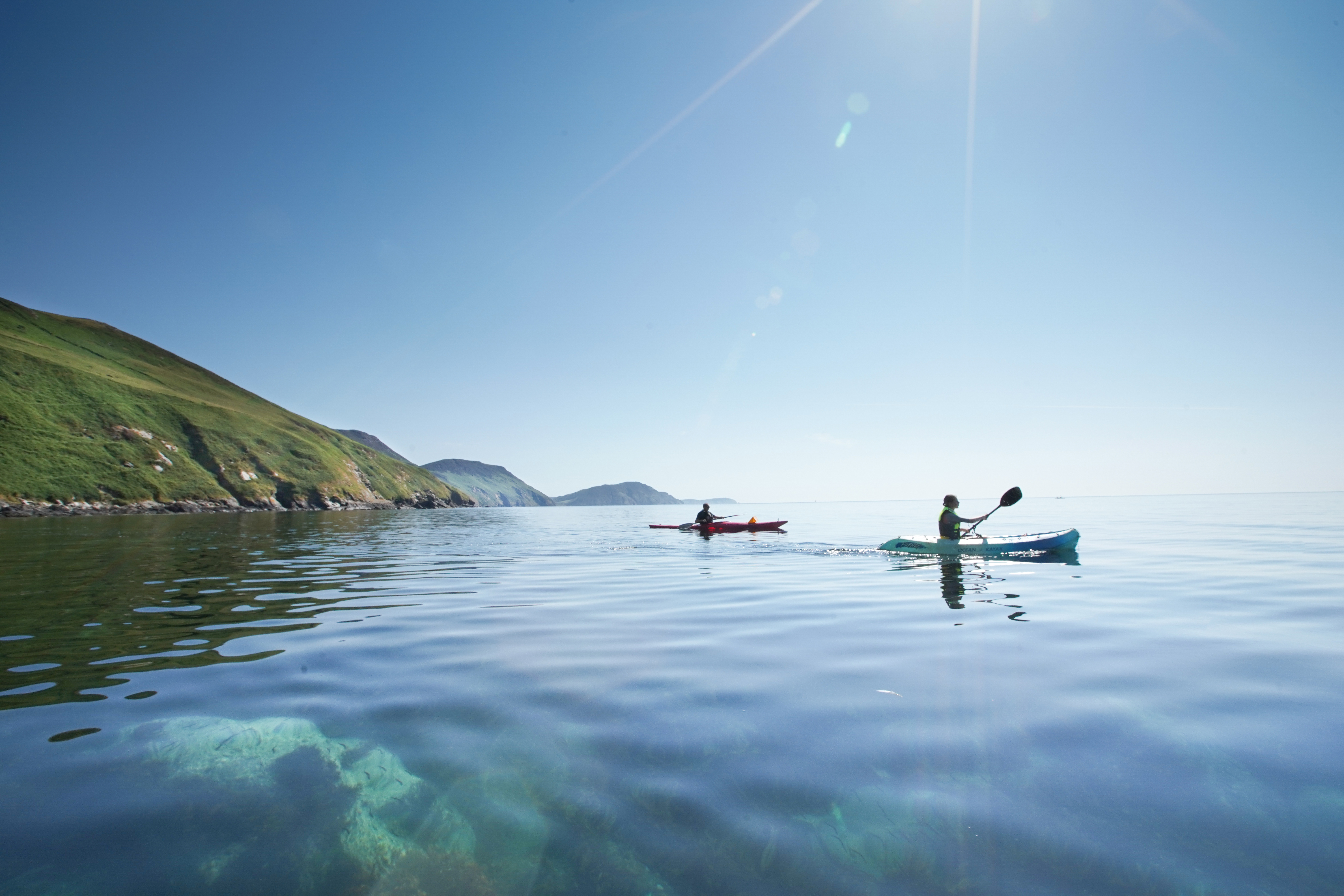
Here are five must-see sea caves, stacks and archways for your Isle of Man itinerary:
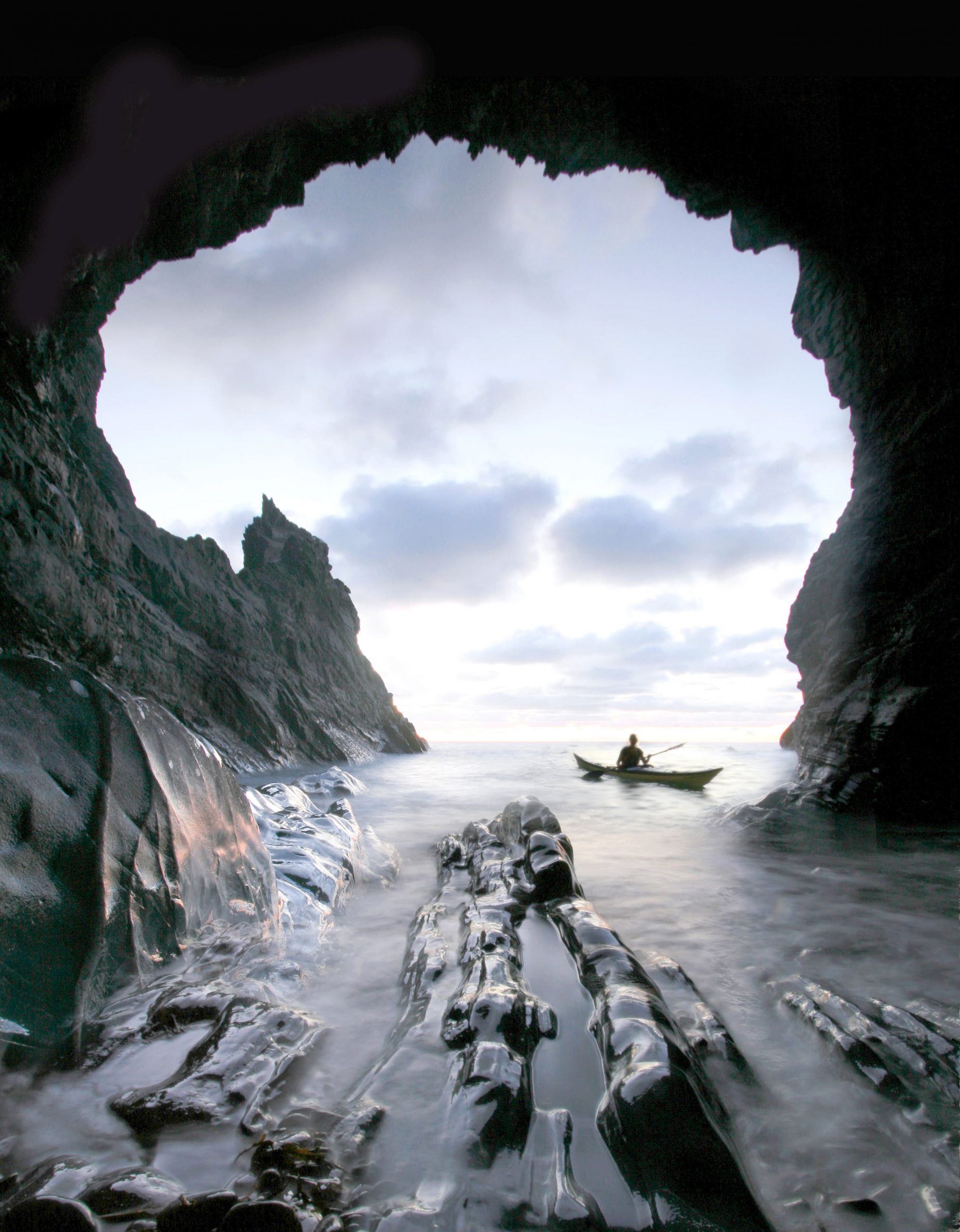
1. Africa Cave, Thistle Head
Located beneath Thistle Head, south of Peel, this cave is a truly stunning, naturally sculpted formation. Its name comes from its rumoured shape, which resembles the continent of Africa. The surrounding cliffs are composed of incredible zig-zag rock formations that were violently forced up during continental collisions millions of years ago. Due to its location, Africa Cave is only accessible by boat, kayak, or paddleboard. Visiting in the spring or summer offers the chance to spot puffins in the area.
2. Bradda Smugglers Cave and Archway
Found along the coast near Port Erin, this cave has a fascinating history tied to the island’s illicit trade. The cave features a hole in its roof, believed to have been created by 18th-century smugglers to haul contraband goods ashore. The entire area is suitable for coasteering, involving clambering over sheer cliffs and jumps, and the cave itself can be reached by scrambling down or via kayak.
3. Fairies’ Hole, Chasms Cave
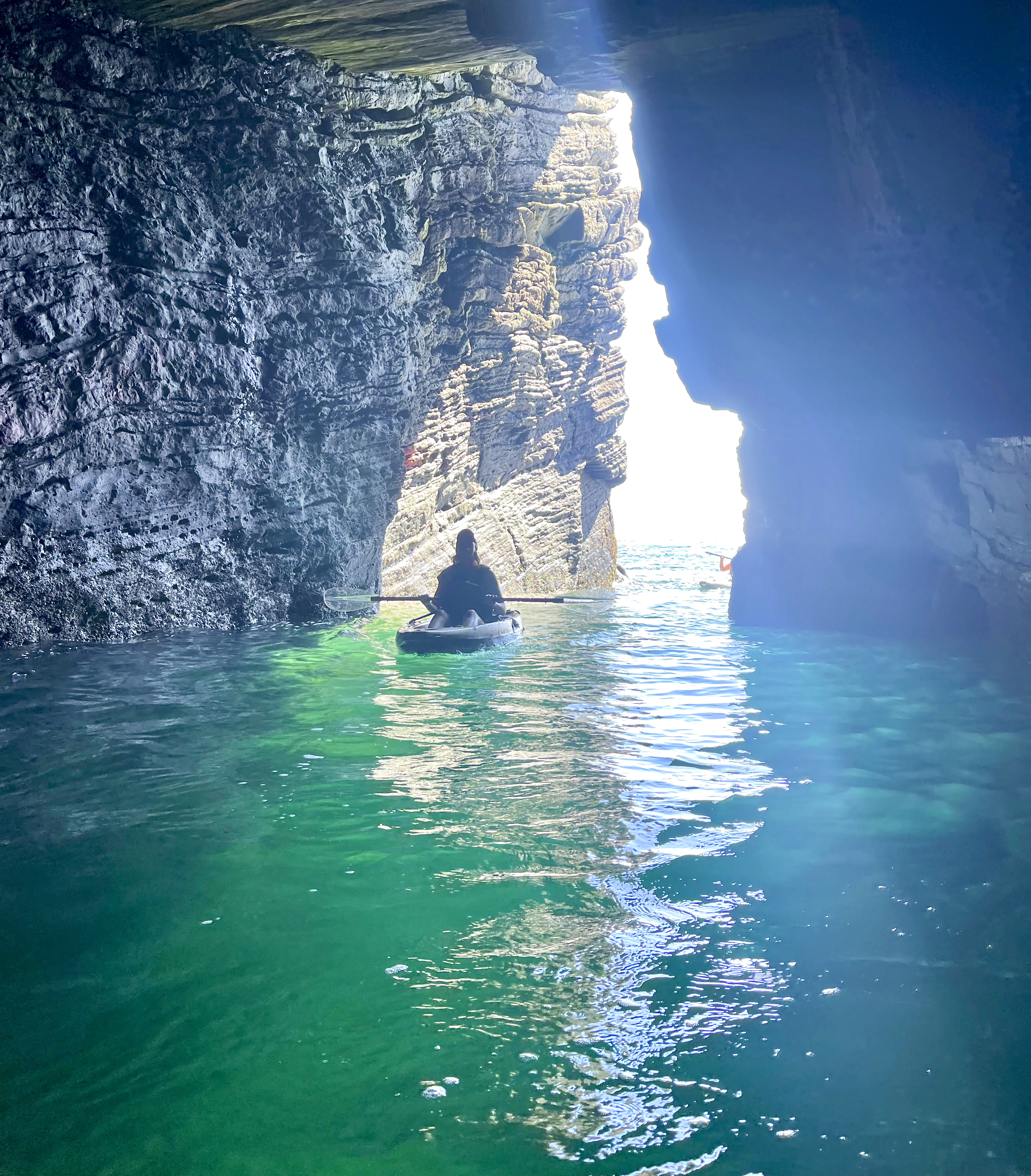
This magical cavern is situated within the dramatic Chasms area. The cave earns its name because the morning light refracts off the underwater barnacles, causing the interior to glow a bright blue-green colour. The surrounding cliffs are vast and vertical, made of unique quartzite and sandstone deposits from an ancient seabed that were thrust up to incredible heights. This area is also popular for spotting colonies of nesting seabirds like kittiwakes, guillemots, and razorbills during spring and summer. Access is typically via kayak or paddleboard just before reaching the Sugar Loaf sea stack.
4. Stack Volcanic Basalt pillars
This unique sea stack is formed of hexagonal basalt columns, remnants of an ancient volcanic plug. While these pillars are not as uniform as their Irish counterparts, they are remarkable geological structures surrounded by limestone pavements. This spot offers both a deep coastal jumping spot (off the east side) and a small, sheltered pool on the west side. Access involves scrambling across rocks at low tide from Scarlett Point, near the red coastguard lookout tower.
5. Eairnyerey & Kione y Garee Seal Caves
Here, two distinct series of caves along the western coastline are accessible for adventures:
- Eairnyerey Seal Caves: These large caves and hidden beaches are reached by kayak or paddleboard heading north from Fleshwick Beach. Keep an eye out for grey seals, which sometimes rest at the back of the caves; seal pups may be present from September to November.
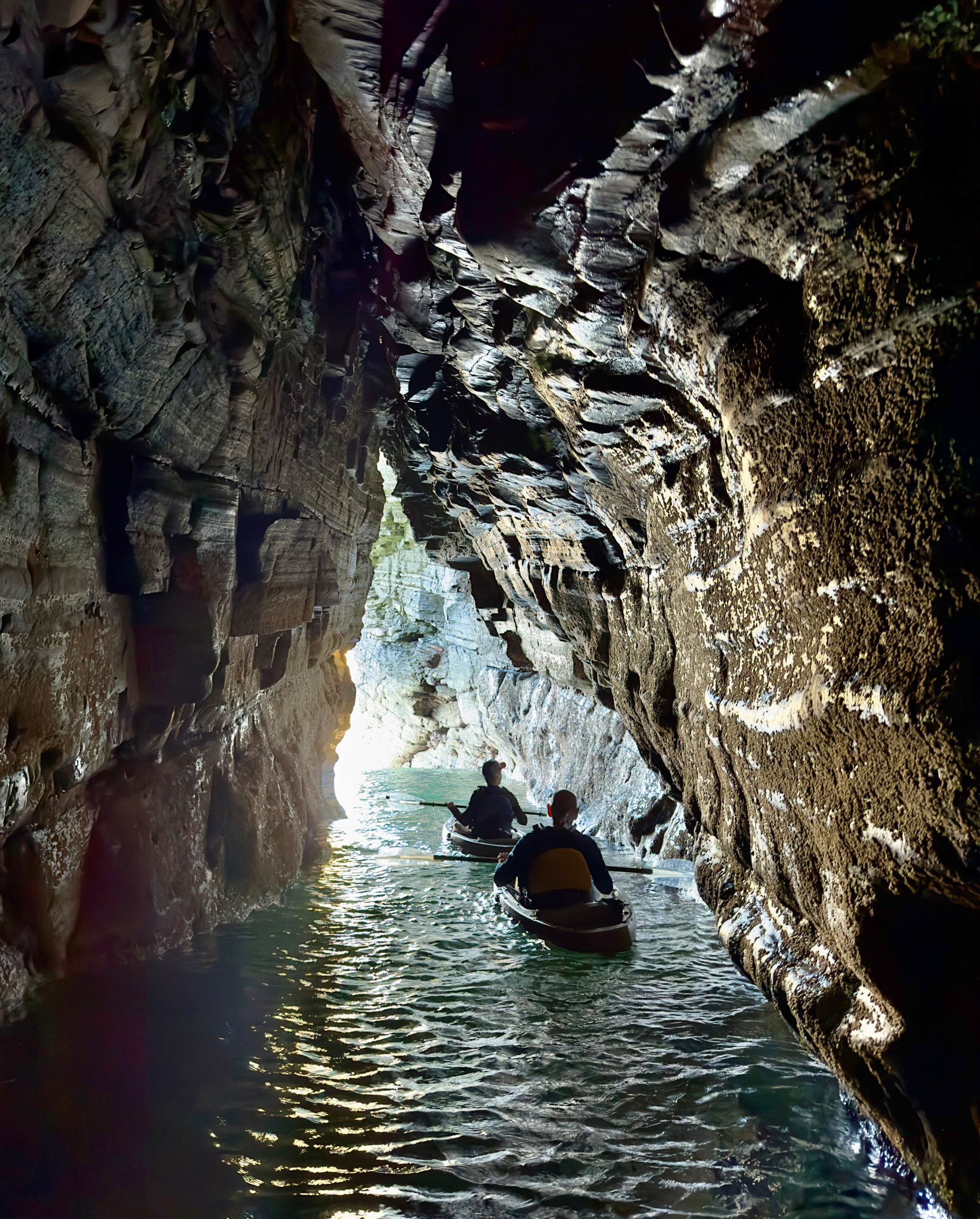
- Kione y Garee Caves and Tunnel: This cave offers an exciting passage. At mid- to high tide, you can paddle right through it to emerge out into a different bay. If visiting at low tide, you can walk through the cave, and an old mine adit (entrance passage) can be seen near the entrance.
Important Safety Note
Sea caves are truly magical, but exploration requires diligence. Always carry back-up torches, wear a helmet (as small rockfalls can be fatal), and inform someone of your destination before setting out. It is essential to check the tide times, especially since most caves are in the intertidal zone, and be vigilant for swells, even those generated by passing ships. Never disturb seal pups, which are common from late August onwards, or nesting sea birds. If you plan to explore mine or cave tunnels further than you can see, consult an experienced guide to avoid hidden drops.

Wild Guide Isle of Man
Discover the hidden side of this ancient island, from deserted beaches, plunging cliffs and emerald coves to sea caves, forests, waterfalls and lost ruins. Step back into history to explore standing stones, hill forts and Norse carvings. Eat fresh local food next to the sea and sleep out under the stars on the Isle of Man