Publishes 1st May 2026 – order now for shipping in late April
By Dave Hamilton
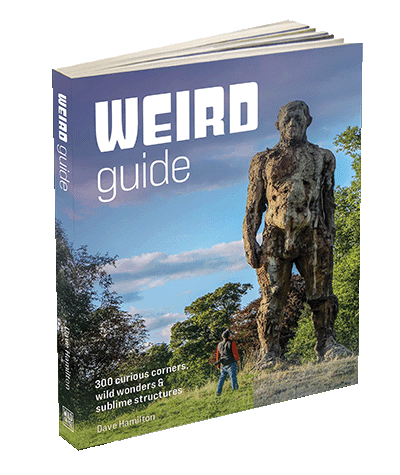
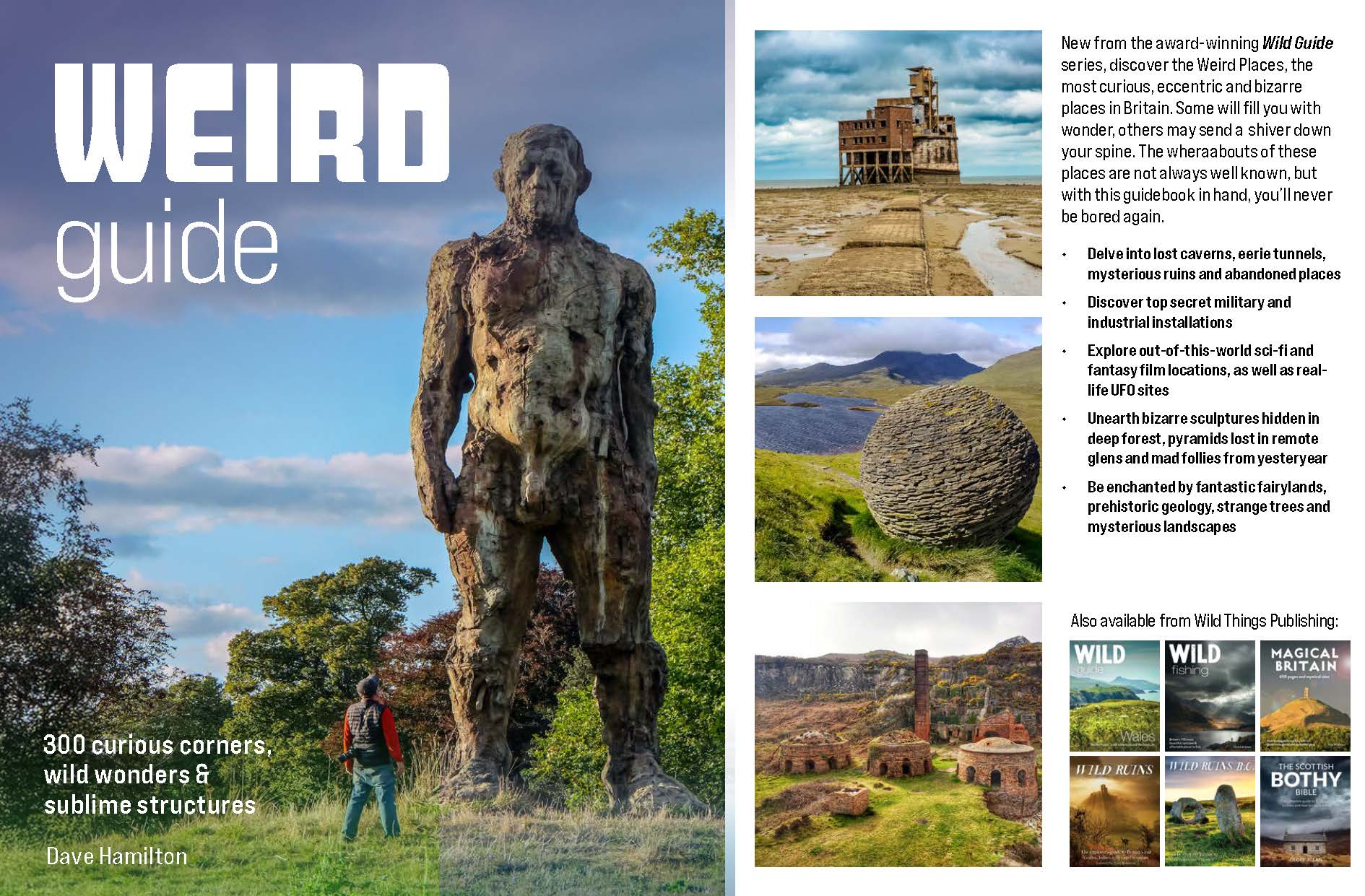
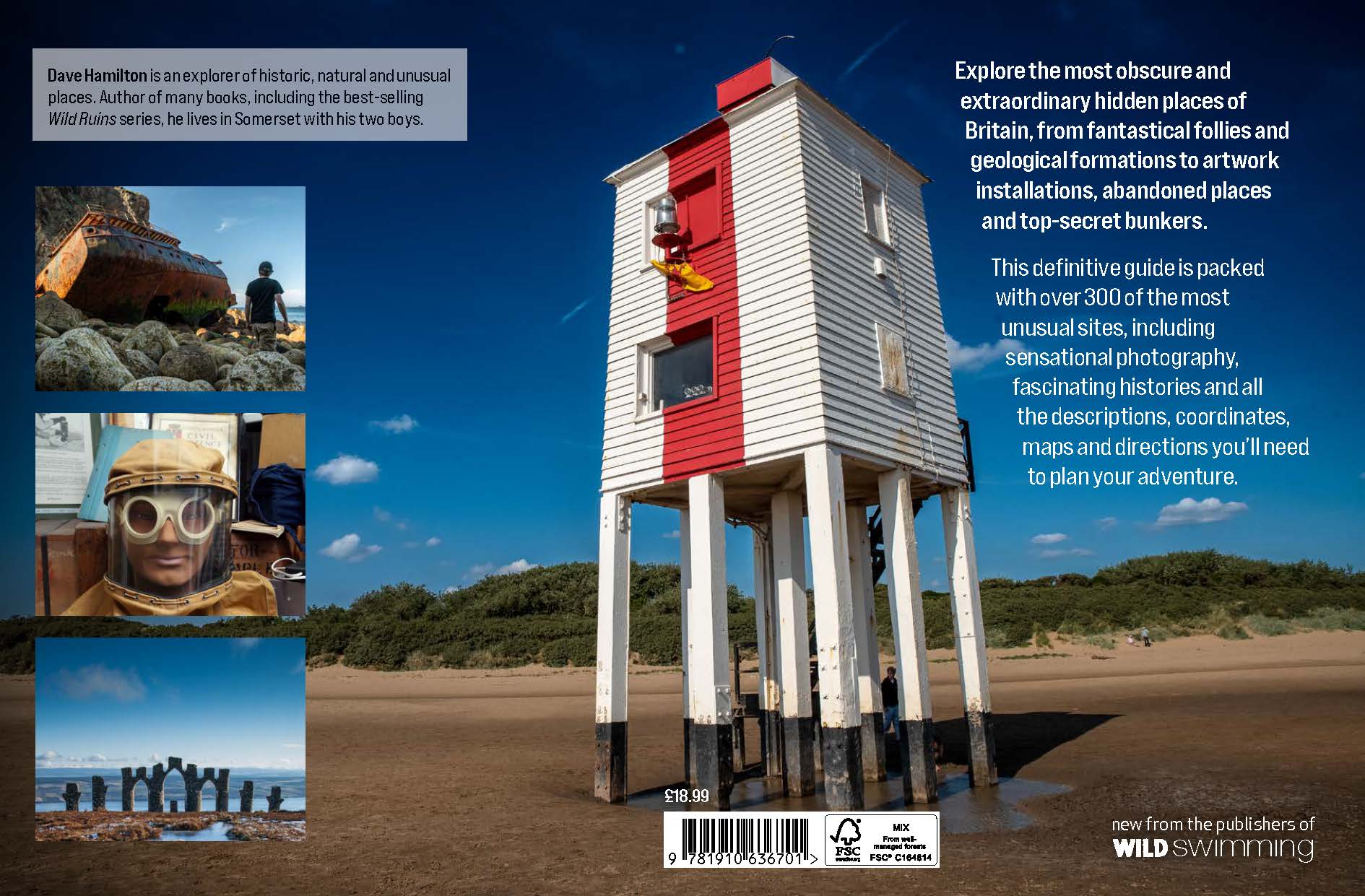
Explore the most obscure and extraordinary hidden places of Britain, from fantastical follies and geological formations to artwork installations, abandoned places and top-secret bunkers.
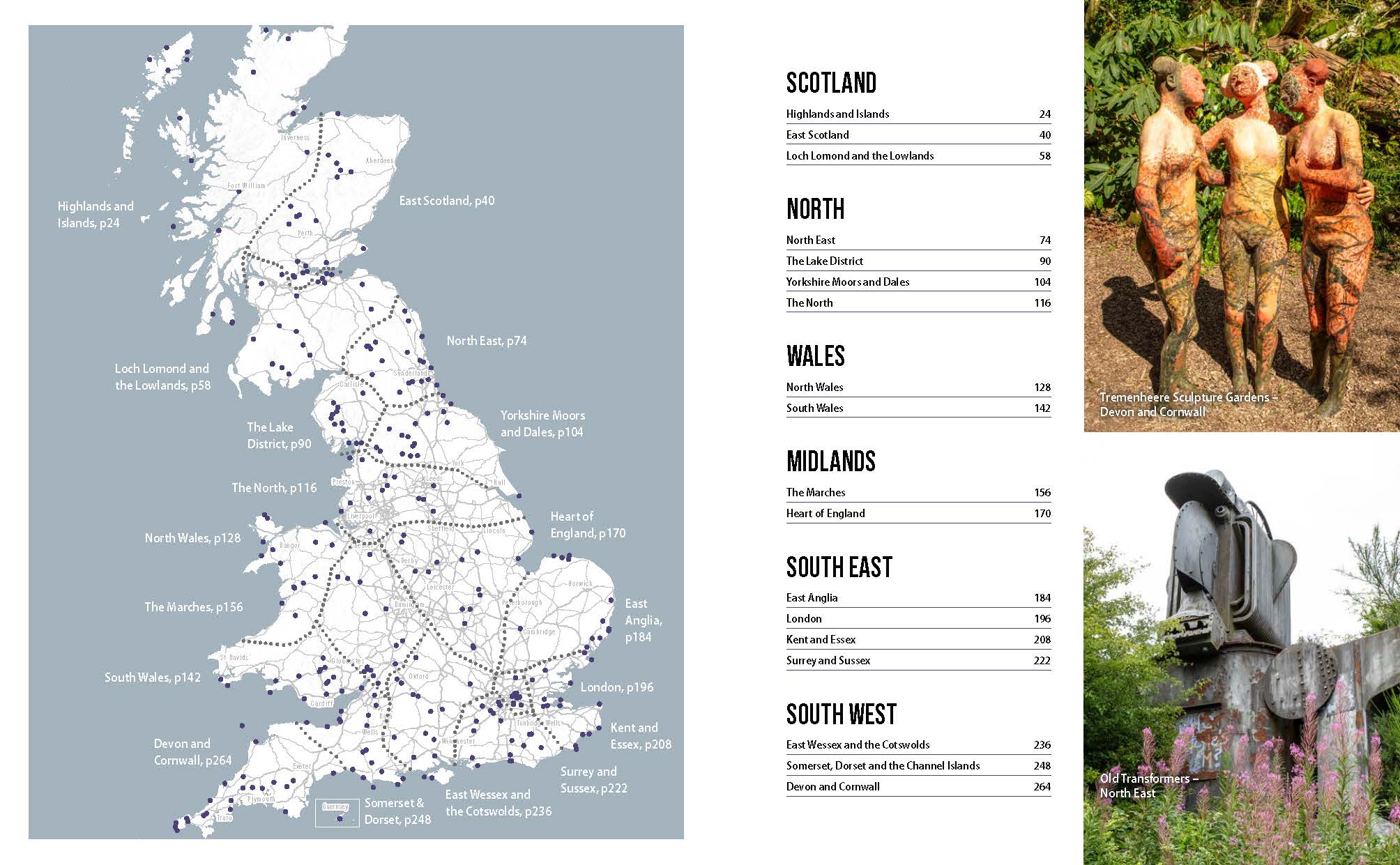
This definitive guide is packed with over 300 of the most unusual sites, including sensational photography, fascinating histories and all the descriptions, coordinates, maps and directions you’ll need to plan your adventure.
New from the award-winning Wild Guide series, discover the Weird Places, the most curious, eccentric and bizarre places in Britain. Some will fill you with wonder, others may send a shiver down your spine. The wheraabouts of these places are not always well known, but with this guidebook in hand, you’ll never be bored again.
- Delve into lost caverns, eerie tunnels, mysterious ruins and abandoned places
- Discover top secret military and industrial installations
- Explore out-of-this-world sci-fi and fantasy film locations, as well as real-life UFO sites
- Unearth bizarre sculptures hidden in deep forest, pyramids lost in remote glens and mad follies from yesteryear
- Be enchanted by fantastic fairylands, prehistoric geology, strange trees and mysterious landscapes
Dave Hamilton is an explorer of historic, natural and unusual places. Author of many books, including the best-selling Wild Ruins series, he lives in Somerset with his two boys.
One thing unites the British more than anything else. It stands there in plain sight but is rarely spoken about. We may try to hide it; we may not admit it to ourselves, but under the surface, deep down, in the nicest possible way and being completely honest we are all a little odd. Not in a sinister way, the British in all their complexity are completely eccentric, weird, unpredictable and downright wonderful. As a nation we have an artistic and creative zest, our fighting spirit and boffin-like inventiveness have come to our aid in times of crisis and our curious British landscape, rich in oddities and legends is like no other place on earth.
British weirdness can manifest as an understated eccentricity: saying goodbye many times before hanging up the phone, apologising when something is not our fault, or laughing as you move out of someone’s way (at least twice) on the pavement at the same time they do. In the fields of film, comedy, music, architecture and art, we are celebrated for our eccentric spirit and boldness. In fields of innovation, we led the tech world with some of our brave and crazy inventions Even our landscapes are damn weird, with some of the oldest, most mysterious and diverse geological oddities in Europe.
From follies, large-scale public art, strange buildings, or oddities in the landscape; this is a guide to the wonderful strangeness of Britain in all its technicolour glory and ingenuity.
The Weird Guide has been gestating for years. Like a mix of meltwaters through soft rock, separate ideas have been percolating through my subconscious. Over the last decade or more, I have dragged my family along to strange landscapes like limestone pavements, fossil beaches, or weird rock formations. They’ve come with me (not always kicking and screaming) to visit ruins lost in the woods, explore underground tunnels, or wander through quarries featured in an ancient Tom Baker episode of Doctor Who. There have been solo trips to engineering feats like the Thames Flood Barrier or trips with friends to wonderfully eccentric sculpture parks, follies, and shipwrecks. After years of oddness, the idea of a guide that tied these strange sites together had finally seeped through to form a vast flowing river. Then, as Hemingway said, ‘Gradually, then suddenly’; the book had no choice but to be born into the world.”
By and large, the entries are split into a handful of distinct categories: Public Artworks, Follies, Rock Formations, Weird Ruins, Film and TV Locations, and World War II Ruins. There is a final category of outliers that begged to be included but didn’t quite fit into any of these groups.
Public Artworks: There are huge public artworks like the Kelpies, Gormley’s Another Place, and the Yoxman (featured on the cover), which, by their very size and nature, demand to be featured. And you’ll find well-known sculpture parks with works by internationally recognised artists. But I’ve also included lesser-known sculpture trails and works that have been commissioned in an effort to regenerate regions suffering from the loss of industry. It’s important to remember that you shouldn’t feel you need to know about art to visit these works or appreciate them; people from all walks of life visit.
Follies: A folly is a building that serves no real purpose other than to be decorative. They can be, but are not limited to, mock castles, arches, towers, temples, or grottos. Whilst there are follies elsewhere in the world, they remain mostly a British and Irish phenomenon. They were built on grand estates during the Georgian and Victorian periods, but you will find the odd modern folly that can cross into the realms of public artwork. Those featured in the book are just a small selection of those found in Britain.
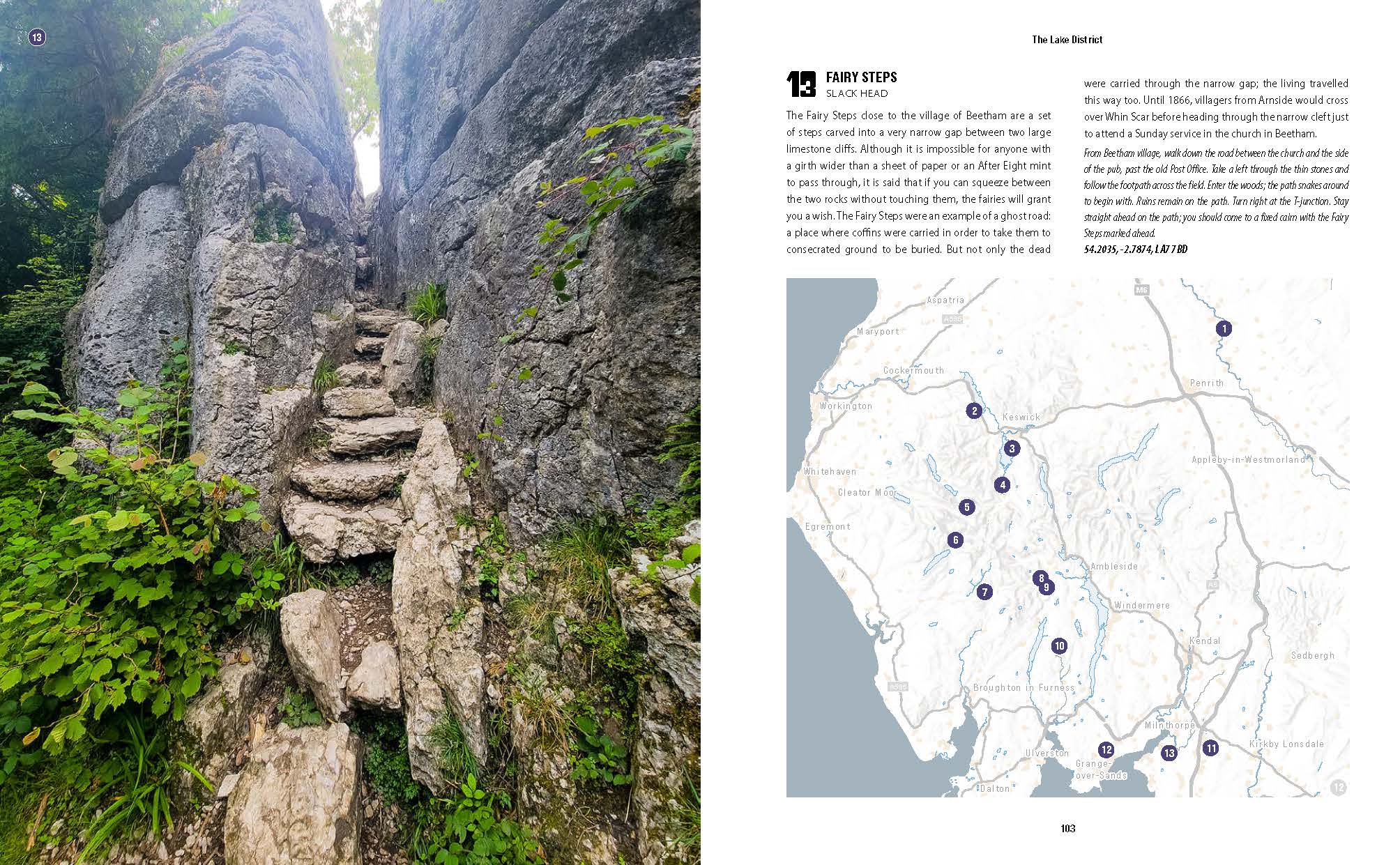
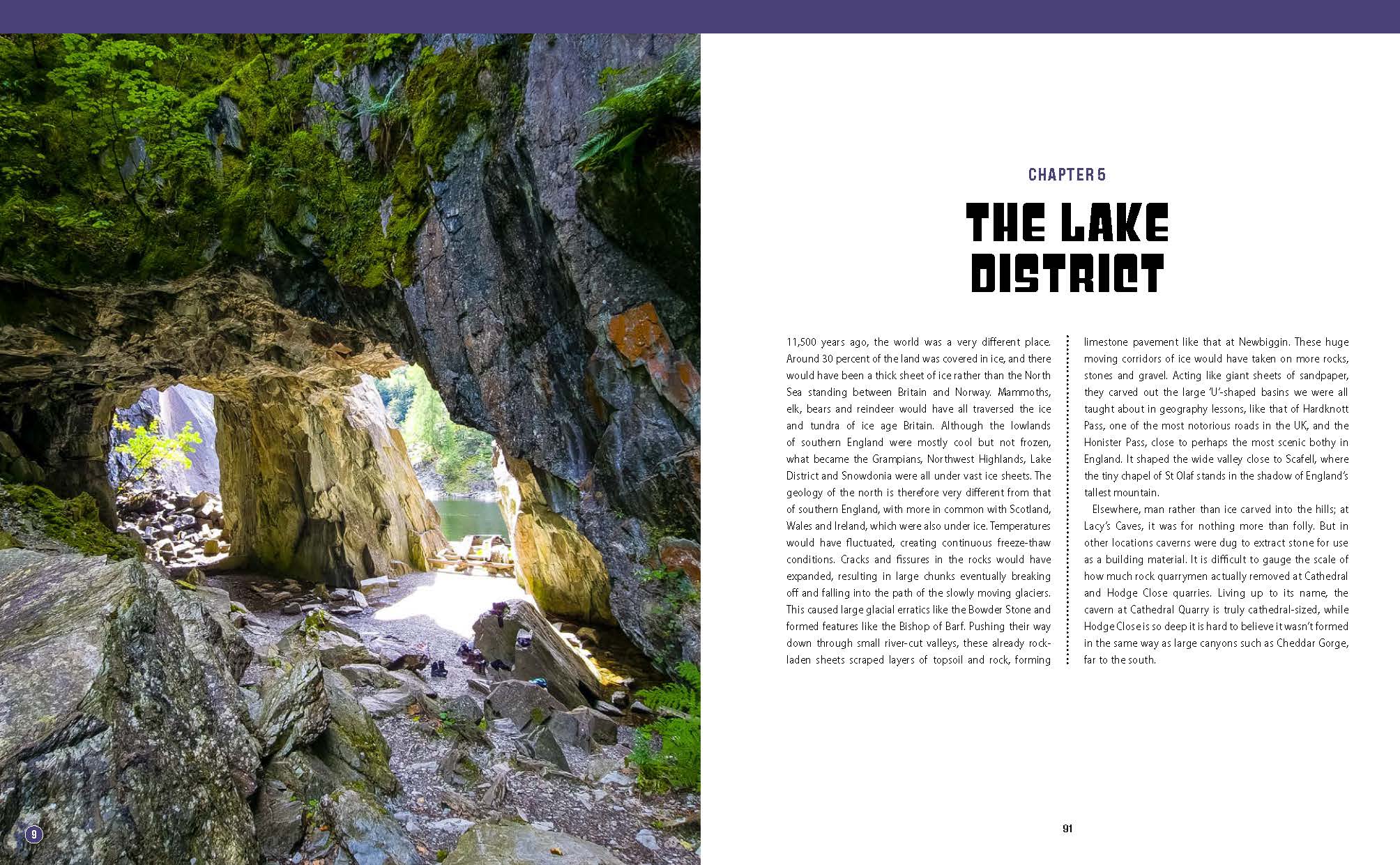
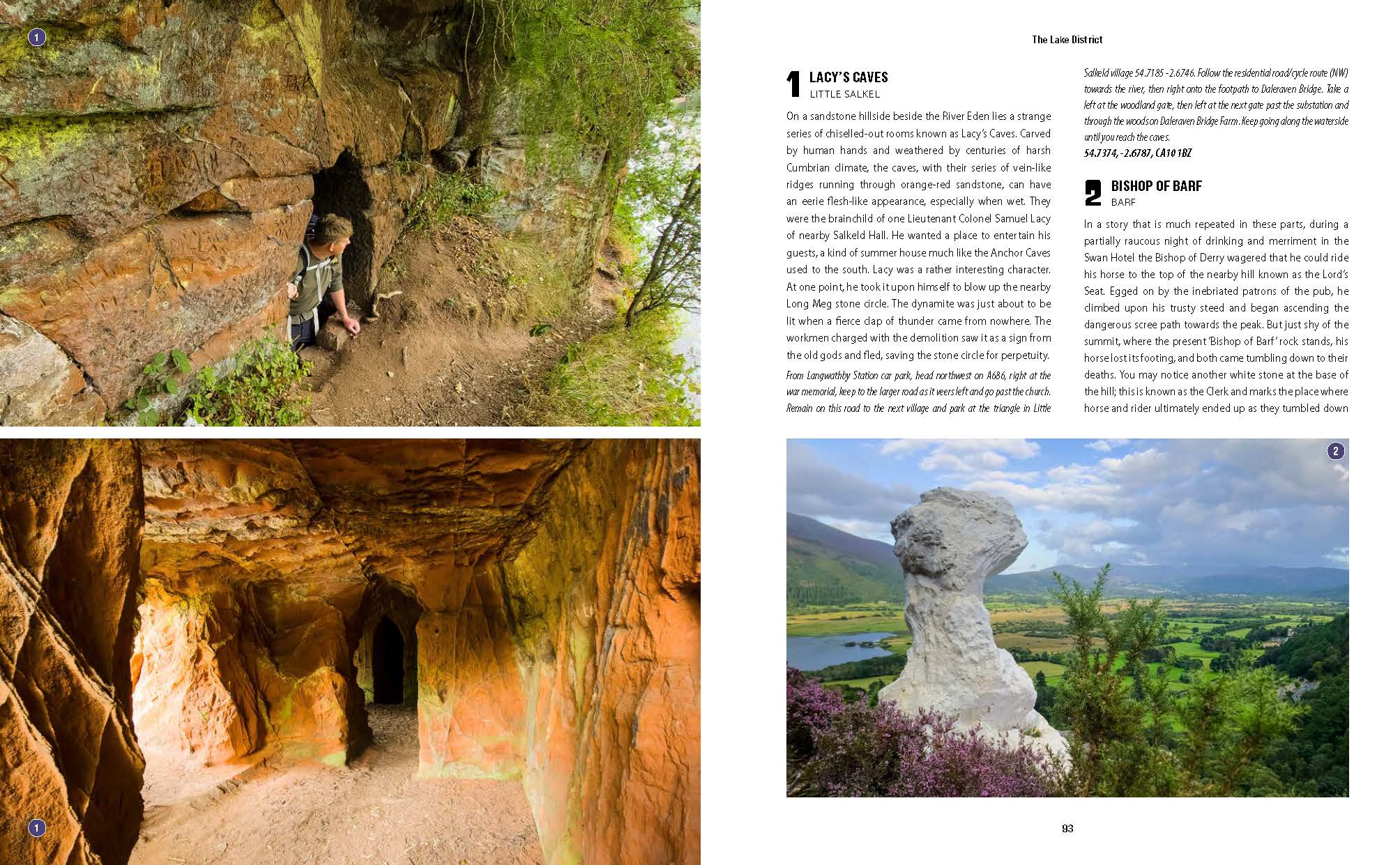
Rock Formations: Britain has a special geology. Over the eons, the land that makes up this island nation has been home to supervolcanoes, moving tectonic plates, and tropical seas. It has had large rivers running through it and has been imprisoned under ice again and again. Each of these events has made its mark, and in these pages, you’ll find oddities such as caves, caverns (natural and man-made), and the surreal sprawling limestone pavements found towards the north of the country.
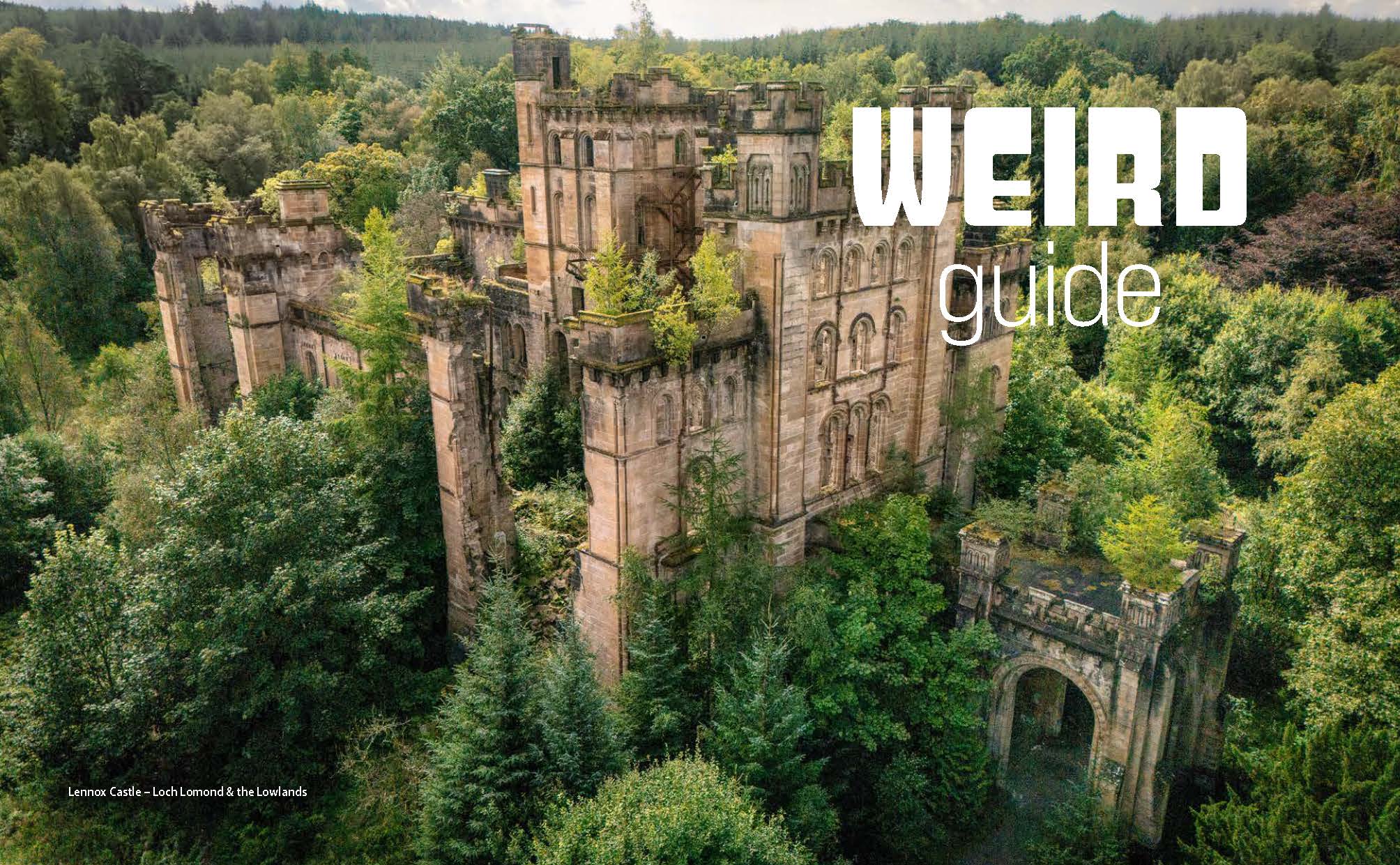
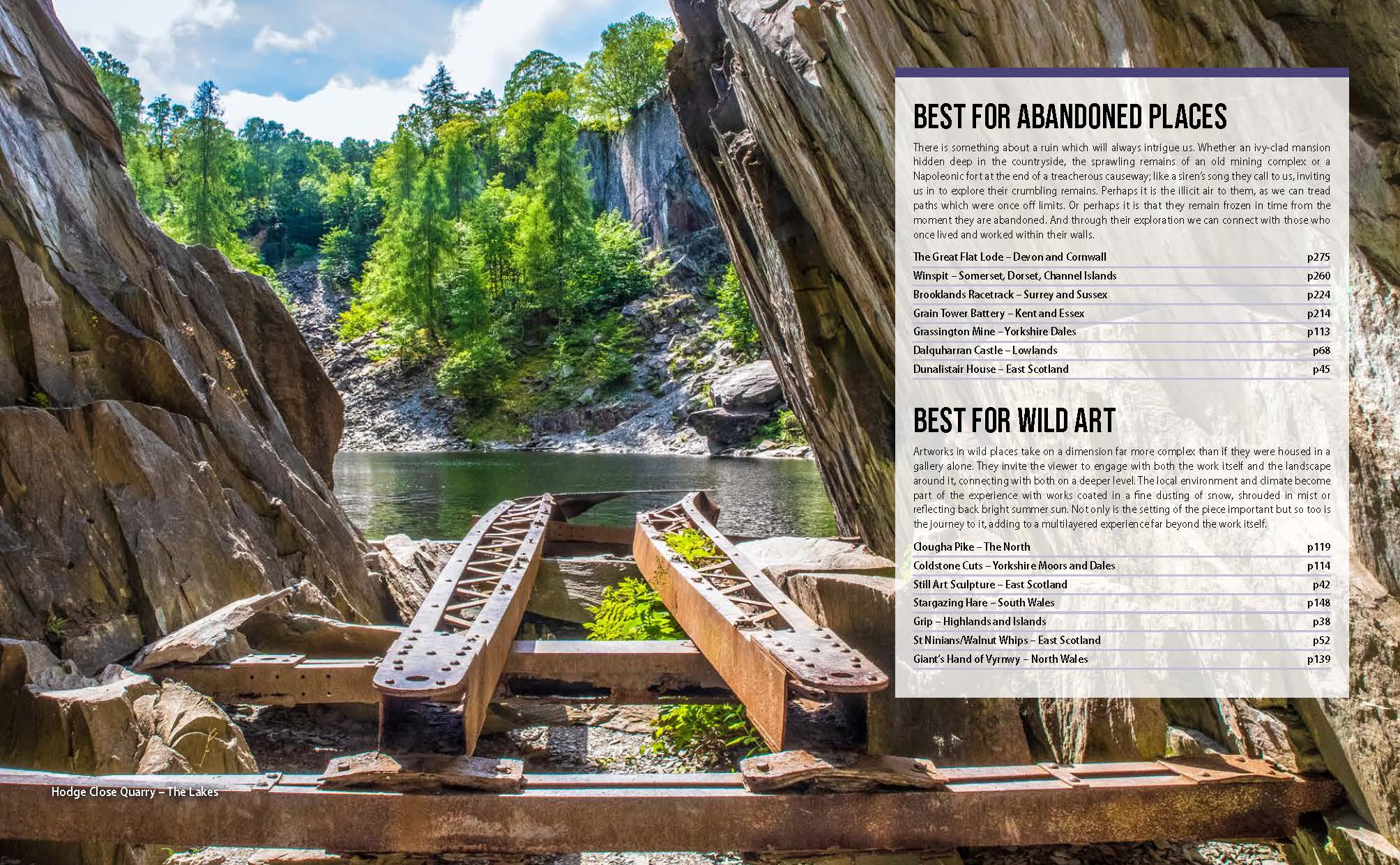
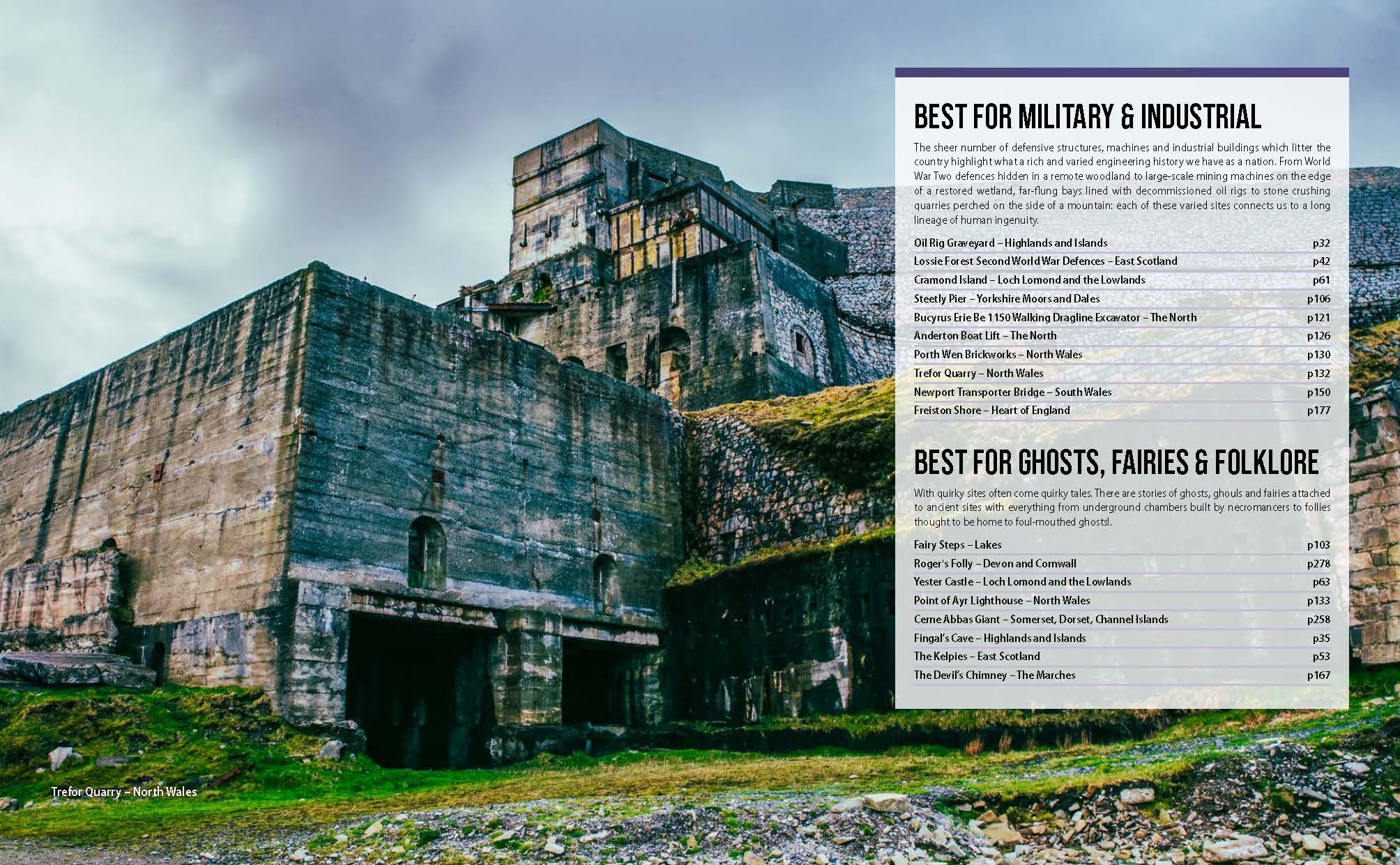
Weird Ruins: The ruins featured here are those that didn’t have a strong place in the other two travel books (Wild Ruins, Wild Ruins BC). With that in mind, you’ll find mining works with underground tunnels, large ruined mansions, and castles with spooky underground chambers. There are also impressive coastal forts dating back to the Napoleonic era.
Film and TV Locations: Thanks to its diverse natural and geological landscapes, its history of heavy industry, and relatively compact size, filmmakers have always been attracted to the British Isles. This book concentrates on locations from sci-fi and fantasy films, as these are a little stranger than the grand old houses featured in
period dramas.
World War II Ruins: During the Second World War, when the threat of invasion was ever present, Britain had no choice but to fortify its borders. Brutalist anti-tank cubes, pillboxes, and gun emplacements popped up all across the shores of this island nation, many of which still remain.
Outliers: The final category is the outliers, sites that don’t really fit into the other categories. These include, but are not limited to, impressive feats of engineering like the Thames Flood Barrier, beaches of petrified forests, the large spoil heaps of Greendyke’s Bing, and The Ringing Stane on Scotland’s Road.