
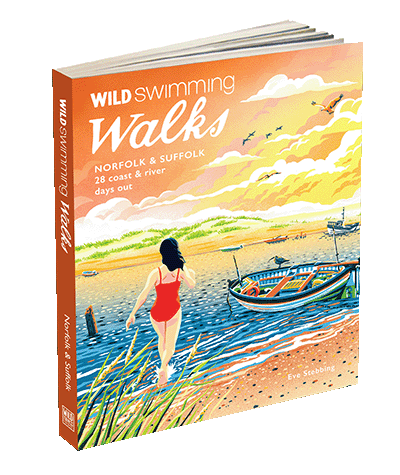
Publishes 1st April 2026 – order now for shipping in late March
By Eve Stebbing
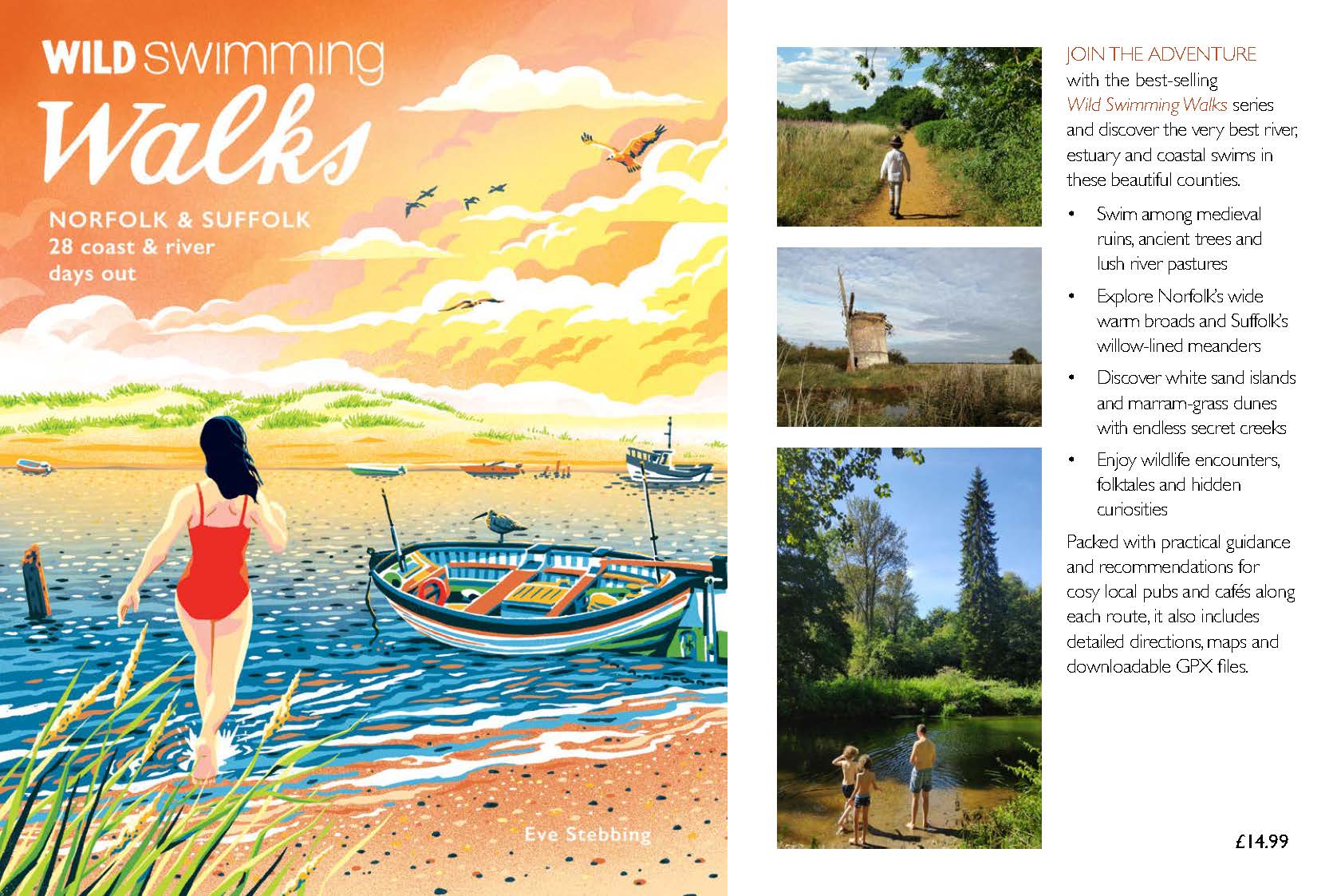
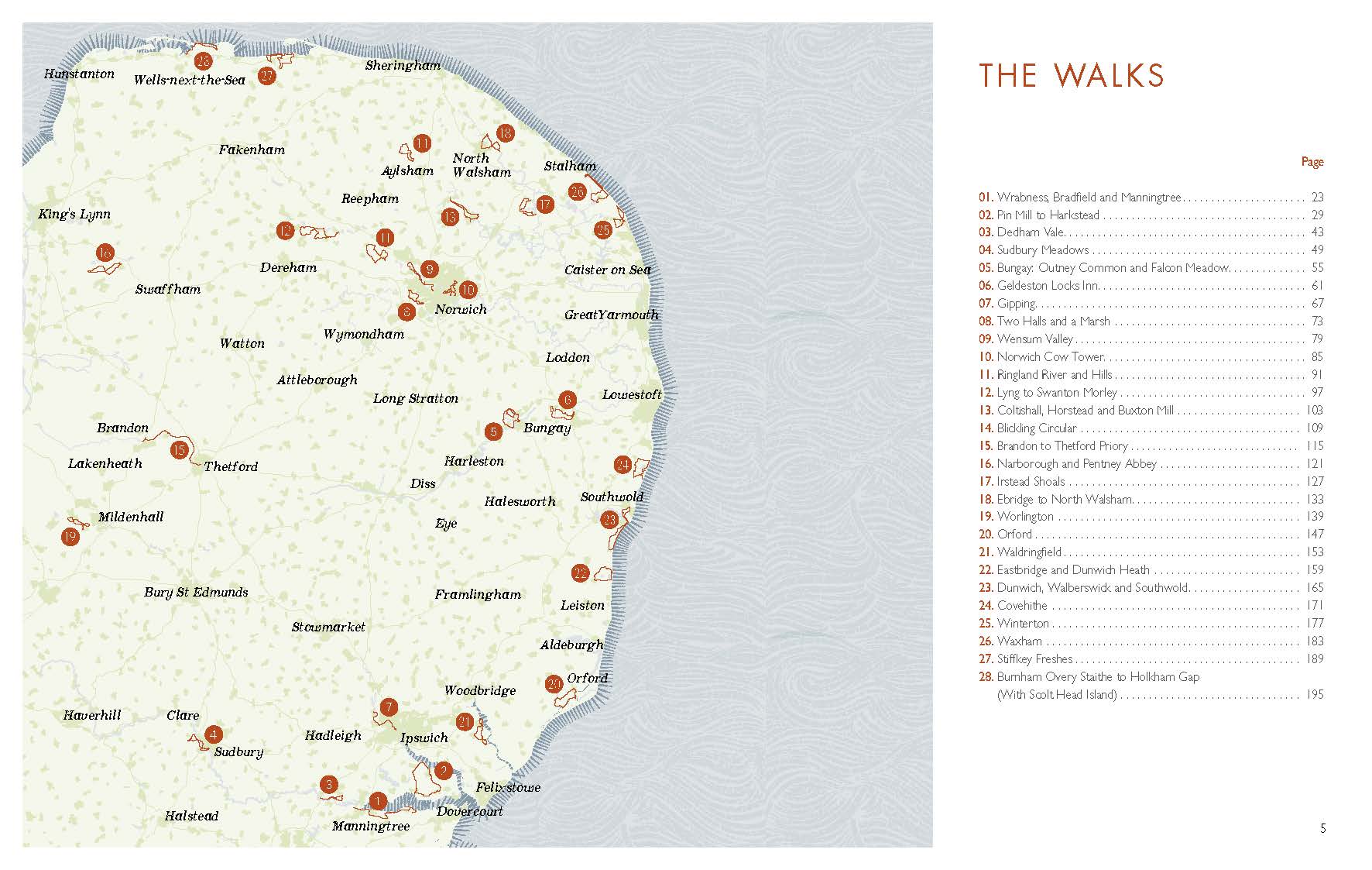
28 days out combining scenic rambles with refreshing swims. From sand dunes to river willows, and hand-picked pitstops, wildlife encounters and hidden curiosities. Explore wide Norfolk broads and Suffolk?s secret coves. This is your guide to the region?s most enchanting wild swims and walks. Discover the rivers, lakes and islands of Norfolk and Suffolk with Wild Swimming Walks Norfolk & Suffolk, featuring 28 carefully chosen routes that combine beautiful walks with unforgettable swims. Explore chalk streams, tidal pools and desert islands, paddle sandy coves and river beaches, and wander through dunes, marshes and quiet countryside. Along the way you?ll find charming pubs, village caf?s and intriguing curiosities ? from historic churches to quirky follies. Each route includes maps, directions and insider tips to help you uncover both the best swim spots and the character of these unique landscapes. Whether you?re after family-friendly outings, romantic riverside strolls or more adventurous coastal explorations, this book is the perfect companion for discovering Norfolk and Suffolk?s most magical waters.
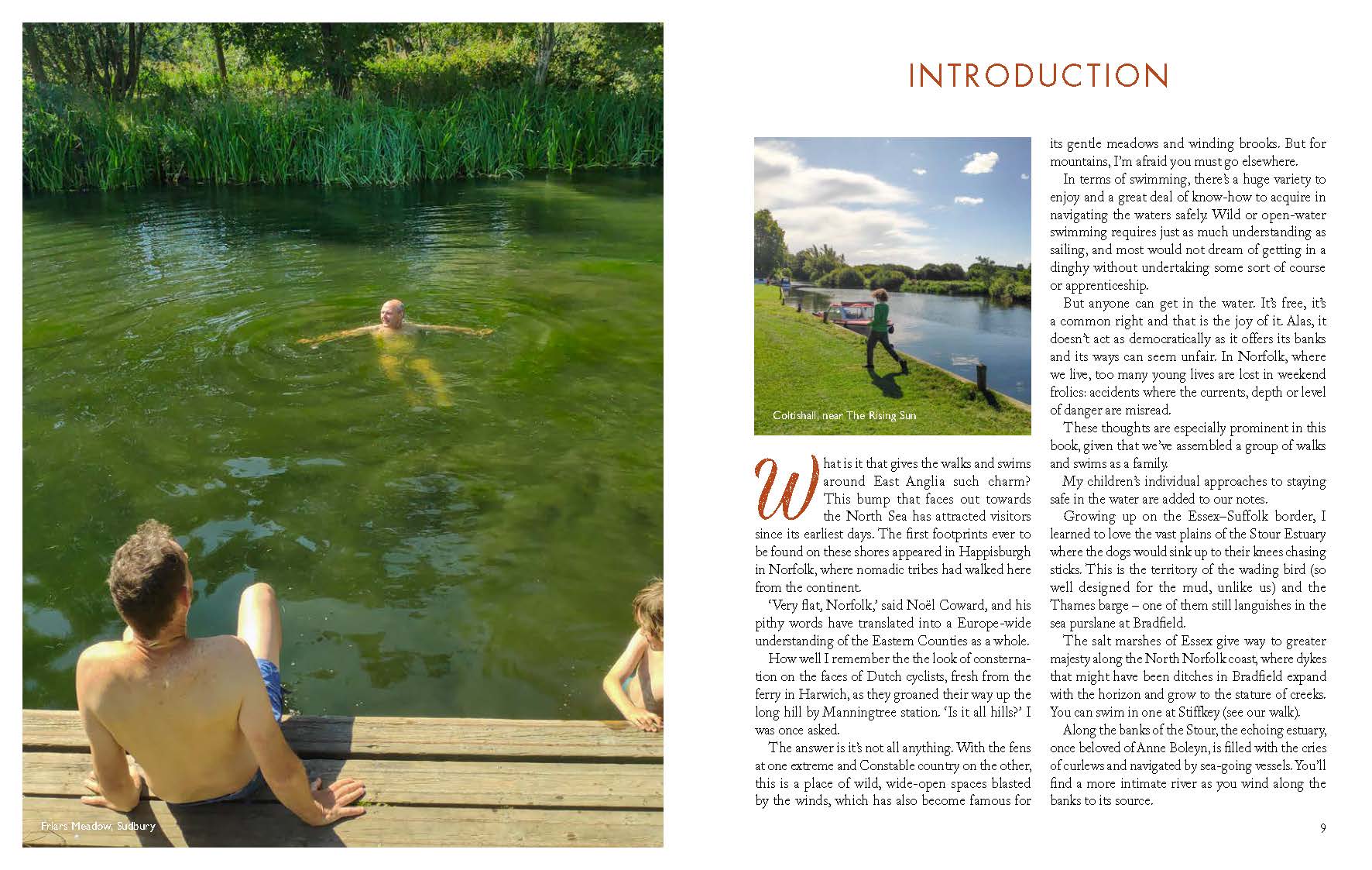
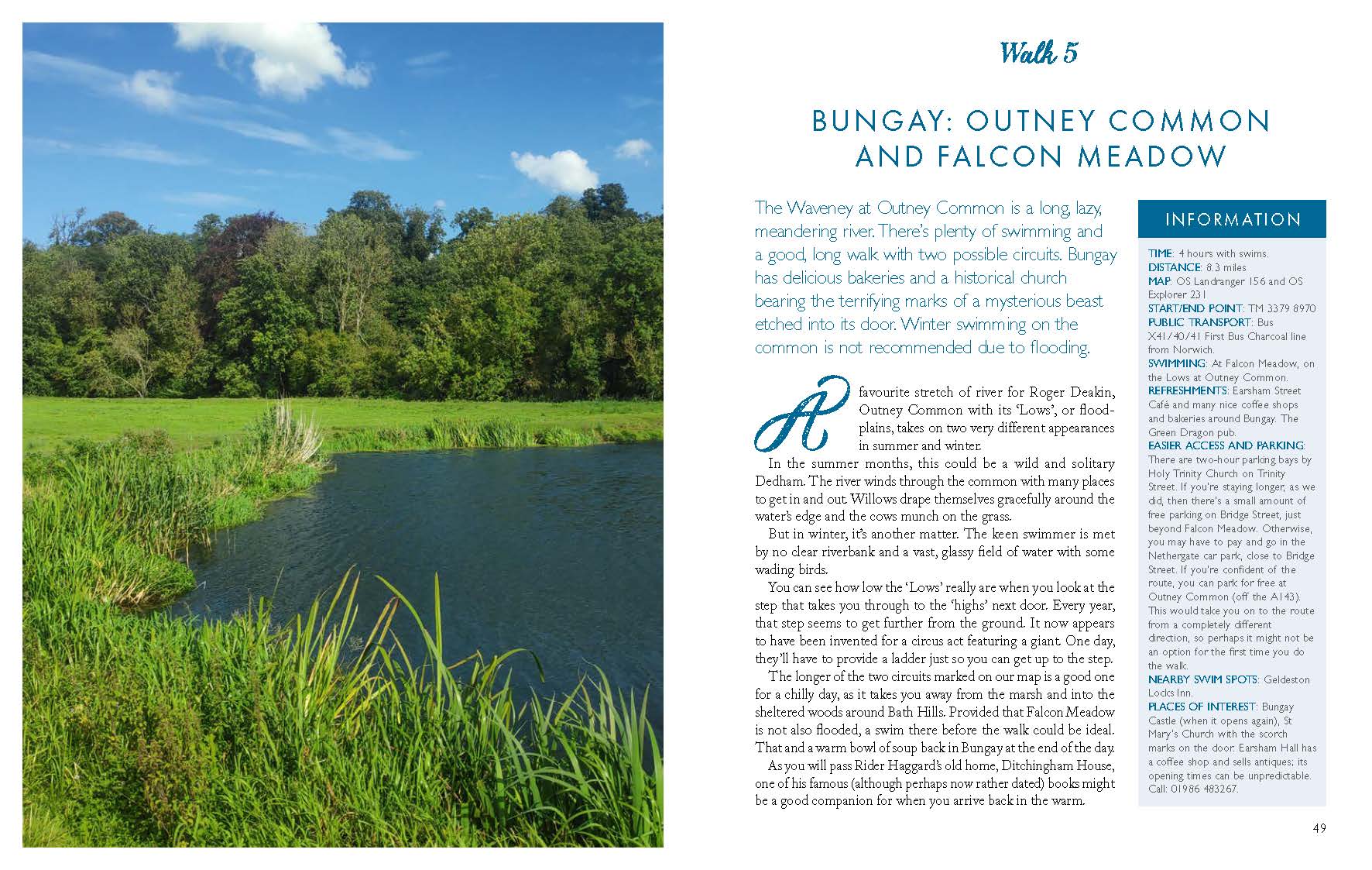
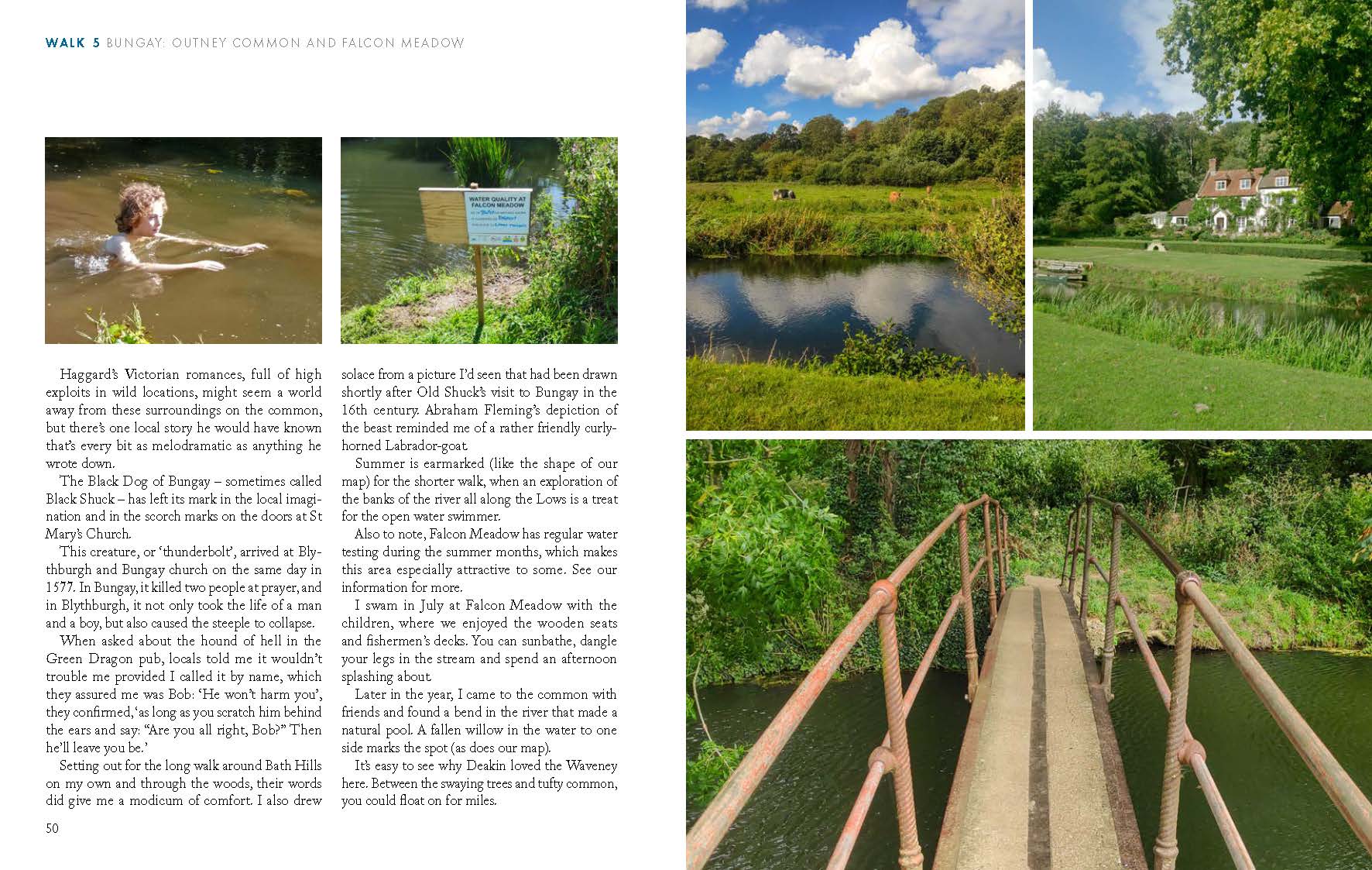
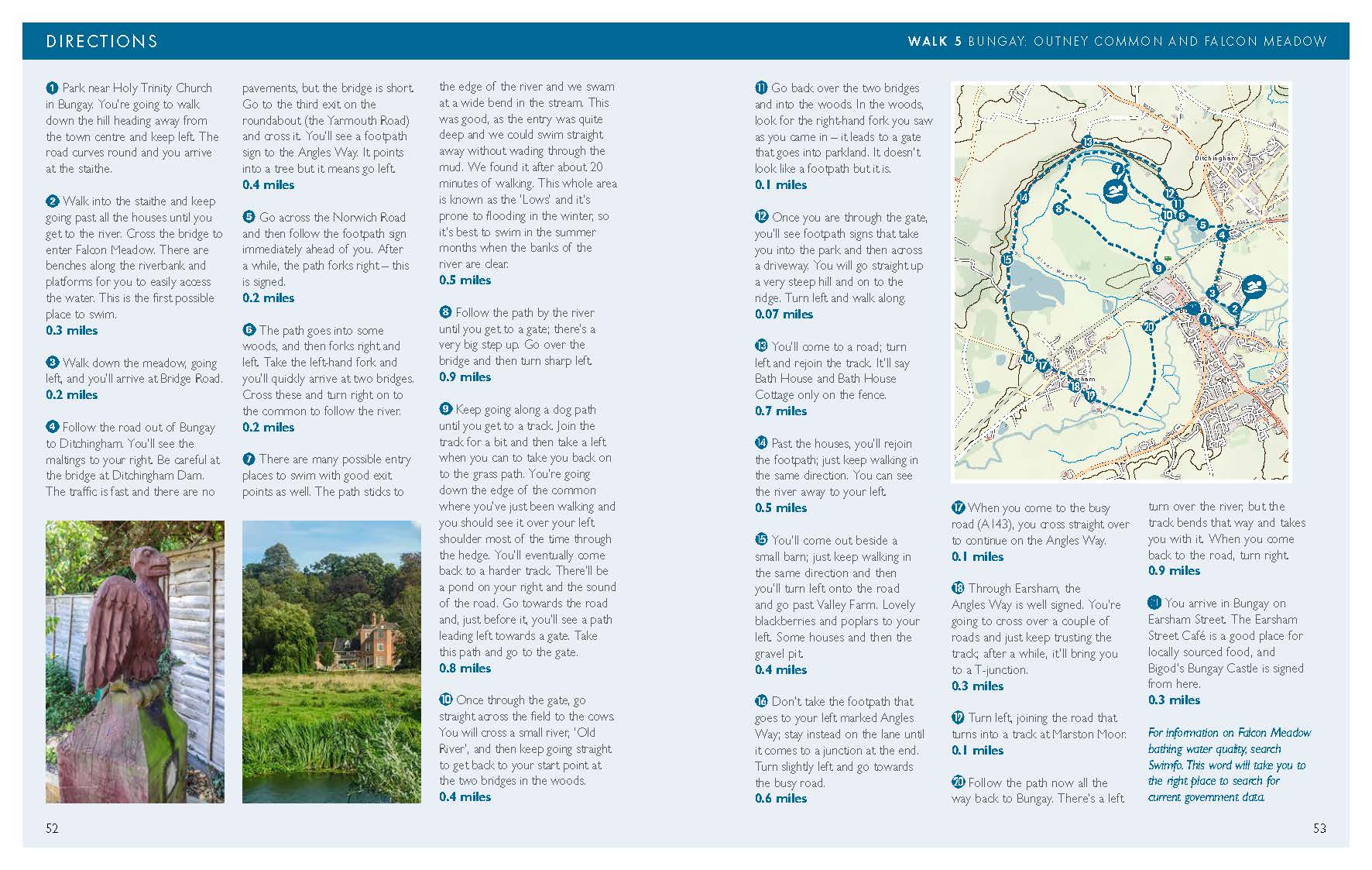
Eve is a writer, producer and year-round swimmer. She is founder of SpinOff Theatre, with a passion for travelling productions rooted in rural histories and local voices. She lives in Norwich with her husband and two sons.
JOIN THE ADVENTURE with the best-selling Wild Swimming Walks series and discover the very best river, estuary and coastal swims in these beautiful counties.
Swim among medieval ruins, ancient trees and lush river pastures
Explore Norfolk’s wide warm broads and Suffolk’s willow-lined meanders
Discover white sand islands and marram-grass dunes with endless secret creeks
Enjoy wildlife encounters, folktales and hidden curiosities
Packed with practical guidance and recommendations for cosy local pubs and cafés along each route, it also includes detailed directions, maps and downloadable GPX files.
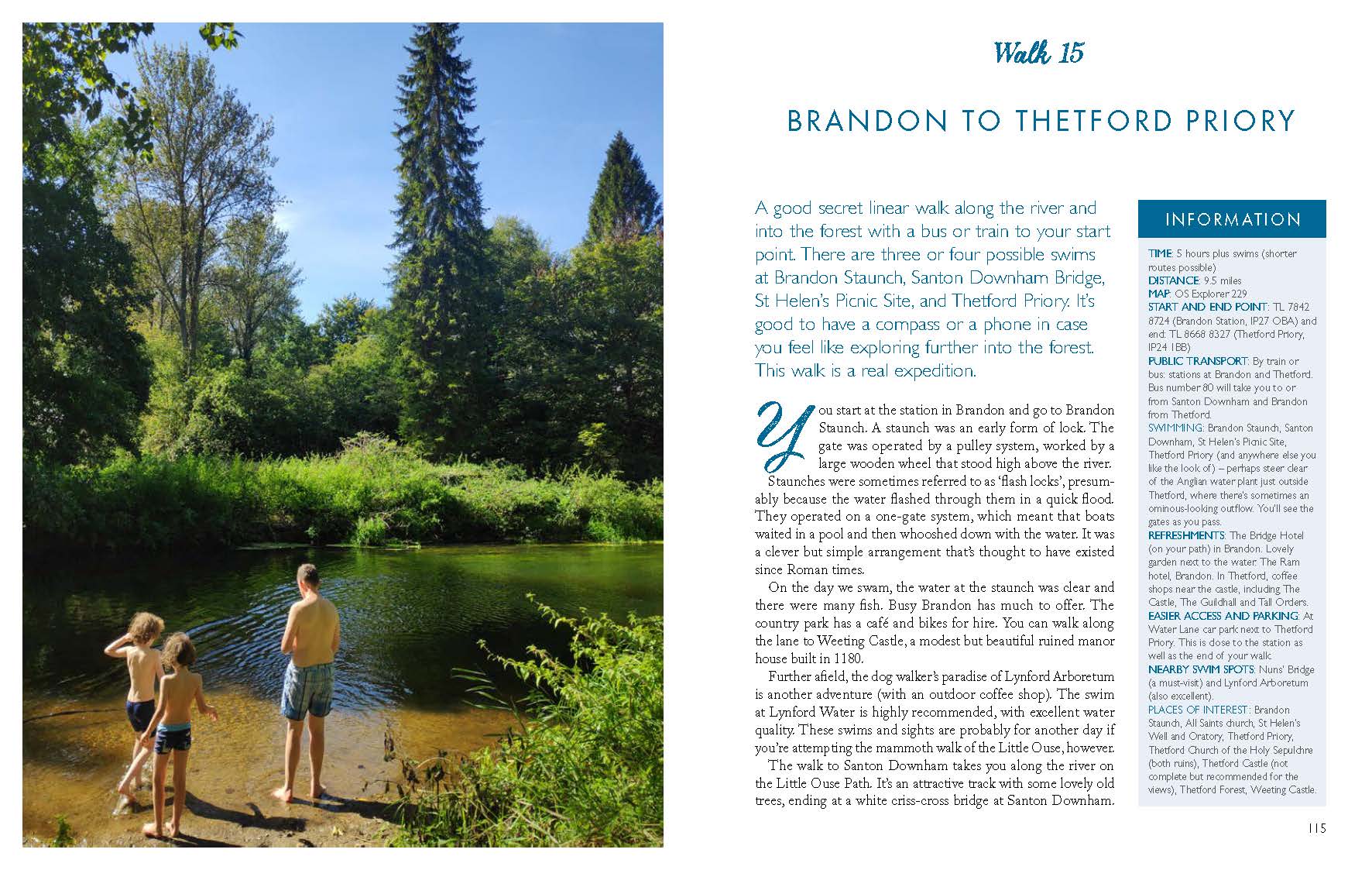
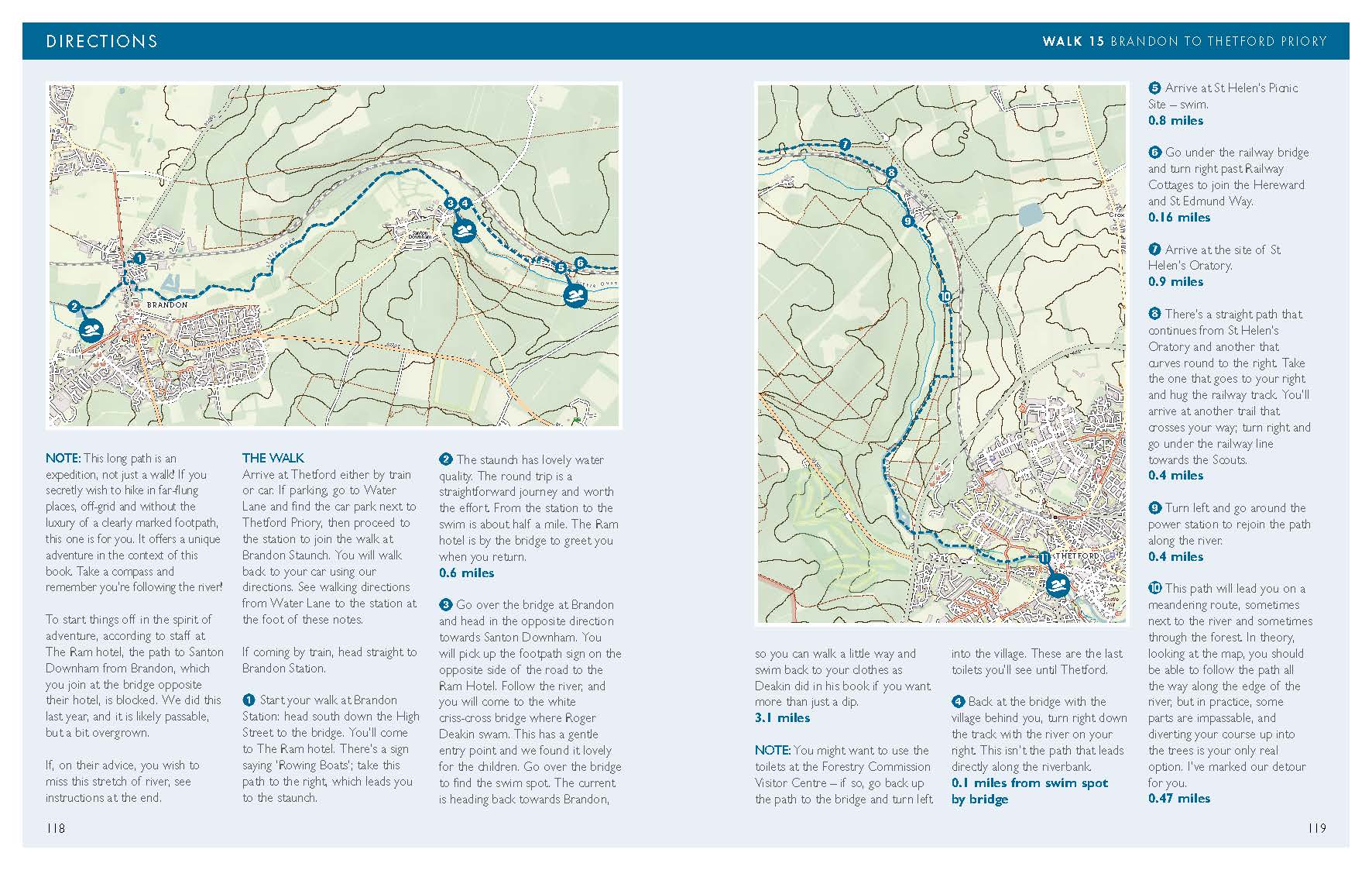
What is it that gives the walks and swims around East Anglia such charm? This bump that faces out towards the North Sea has attracted visitors since its earliest days. The first footprints ever to be found on these shores appeared in Happisburgh in Norfolk, where nomadic tribes had walked here from the continent.
‘Very flat, Norfolk,’ said Noël Coward, and his pithy words have translated into a Europe-wide understanding of the Eastern Counties as a whole.
How well I remember the the look of consternation on the faces of Dutch cyclists, fresh from the ferry in Harwich, as they groaned their way up the long hill by Manningtree station. ‘Is it all hills?’ I was once asked.
The answer is it’s not all anything. With the fens at one extreme and Constable country on the other, this is a place of wild, wide-open spaces blasted by the winds, which has also become famous for its gentle meadows and winding brooks. But for mountains, I’m afraid you must go elsewhere.
In terms of swimming, there’s a huge variety to enjoy and a great deal of know-how to acquire in navigating the waters safely. Wild or open-water swimming requires just as much understanding as sailing, and most would not dream of getting in a dinghy without undertaking some sort of course or apprenticeship.
But anyone can get in the water. It’s free, it’s a common right and that is the joy of it. Alas, it doesn’t act as democratically as it offers its banks and its ways can seem unfair. In Norfolk, where we live, too many young lives are lost in weekend frolics: accidents where the currents, depth or level of danger are misread.
These thoughts are especially prominent in this book, given that we’ve assembled a group of walks and swims as a family.
My children’s individual approaches to staying safe in the water are added to our notes.
Growing up on the Essex–Suffolk border, I learned to love the vast plains of the Stour Estuary where the dogs would sink up to their knees chasing sticks. This is the territory of the wading bird (so well designed for the mud, unlike us) and the Thames barge – one of them still languishes in the sea purslane at Bradfield.
The salt marshes of Essex give way to greater majesty along the North Norfolk coast, where dykes that might have been ditches in Bradfield expand with the horizon and grow to the stature of creeks. You can swim in one at Stiffkey (see our walk).
Along the banks of the Stour, the echoing estuary, once beloved of Anne Boleyn, is filled with the cries of curlews and navigated by sea-going vessels. You’ll find a more intimate river as you wind along the banks to its source.
Dedham Vale reveals a stream with silvery willows, a landscape that was made famous by the artist John Constable. It’s still a mystery why the light here makes the river different from the one you see in Sudbury, upstream.
At Brundon, where the Sudbury Common Lands Charity has done so much to protect the unique meadows, there are weirs and salmon leaps and even a Victorian bathing pool to discover.
Not so far away, but on another river at Outney Common, the Waveney has a wilder feel to it. The Lows are not a tamed environment – perhaps because they spend so much of the year hidden under water and ice. Come at Christmas, and the tufty grass is a glassy expanse, more fit for skating than swimming. Wellies are a must if you want to experience the Outney walk in winter, and up in the woods on Bath Hills is a better place than on the marsh once the snow has fallen.
Each of the rivers in this book has such a tale to tell, one of the most inspiring being the Gipping, near Ipswich. We trace its line in our walks from the Orwell near Pin Mill all the way to Stoke Bridge, where the river changes name and constitution, losing its salty tang, and find it reedy-banked, if slightly weedy, as it opens up for swimming near Sproughton Mill and Bramford Meadow.
In 1954, the Gipping was declared to be a ‘sewer’. Significant pollution events have been the river’s fate for decades. However, the River Gipping Trust has worked to bring these waters back to life, allowing otters to breed and even kindling the hope of potential navigation between Baylham Lock and Needham Market.
More than 25 of the 200 chalk streams that are noted worldwide find their home in Norfolk. We have made an exploration of these special environments a central focus for our walks and swims close to our family home. The Wensum, the Nar, the River Stiffkey, the Bure, and even the Little Ouse at Santon Downham – all these lie in our pages for you to seek out.
The Wensum flows through Norwich and is easily accessible by bicycle along its banks, as it takes the same route as the Marriott’s Way bridleway for much of its course. Hellesdon Mill, Costessey, Ringland and Lyng all show you a river teeming with fish and clear to the bottom. The swim near Bylaugh Church… what a find!
It’s with the spirit of adventure that the walker sets out beside a footpath sign in some parts of Norfolk. Don’t forget, these ways, like those who live here, have a strong sense of humour. Our maps in the region are carefully checked and our advice is abundant.
Just like explorers of days gone by, however, we have put lines on the map and set out – sometimes not knowing where we travelled.
The magic of discovering a river and a landscape in this way can be a thrill. Narborough and Pentney Double Loop was just such a find: a stretch of the chalky Nar that’s as fresh as a mountain stream and a landscape with awe-inspiring breadth and depth. The play of light on a windy day here is a stage set by Prospero.
I end this introduction with a note on the very special qualities of the coastline that we follow all the way from Eastbridge through to Southwold, Covehithe, and then on up into Norfolk, at Winterton, Waxham, Stiffkey, Holkham, and Burnham Overy Staithe. The threat of erosion and flooding – long the fate of the Suffolk and Norfolk coastline – has real urgency in these lovely places. The cliffs at Winterton are tumbling into the sea, and Benacre Broad is lapped by brackish water.
It’s crucial we act to protect East Anglia’s coastline, with its rasping natterjack toads and little terns, its grey seals and pink-footed geese; and it is so frustrating to see how little management is really being put in place, giving birth, perhaps, to hopeful local myths about secret government plans that may not exist (see Covehithe).
This threatened environment, vanishing as you look at it, holds treasures for the walker and the swimmer that are as rich as any found in far-flung places or imagined lands. For Robinson Crusoe, Daniel Defoe took inspiration from his walks at Winterton. And we hope you will, too.





Reviews
There are no reviews yet.